As China accelerates efforts to eliminate cervical cancer in line with the WHO’s 90-70-90 targets, a critical gap persists between screening and timely treatment, particularly in lower-tier cities and rural communities. While awareness and HPV screening initiatives have expanded, access to localised, fertility-preserving treatment options remains concentrated in tertiary hospitals, limiting the real-world impact of prevention programs.
In this evolving landscape, PHASE Scientific’s exclusive partnership with Liger Medical signals a strategic shift toward portable, community-deployable cervical care solutions. By integrating urine-based HPV screening, AI-powered cytology and colposcopy, and Liger’s portable thermal ablation technology, the collaboration aims to operationalise a true “screen-diagnose-treat” model within primary and community healthcare settings.
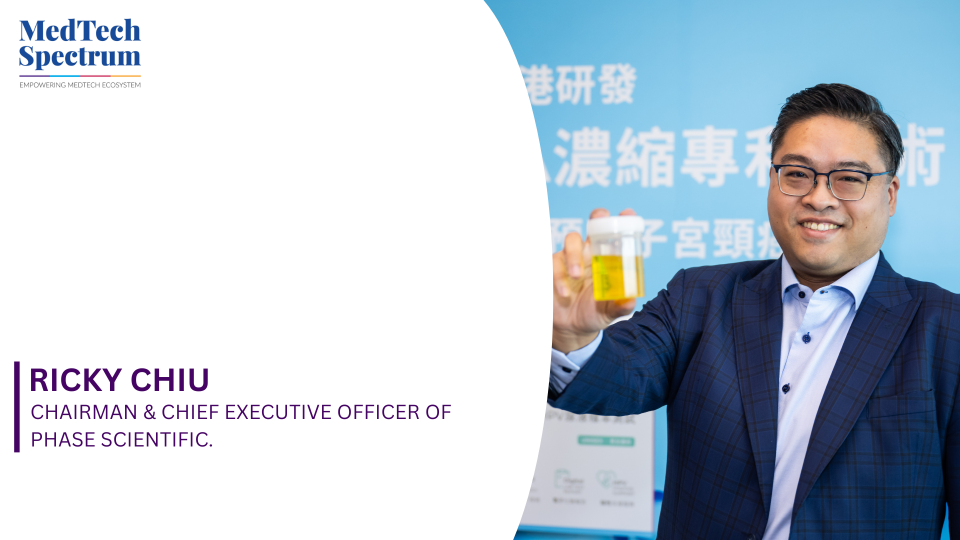
In this conversation with MedTech Spectrum, Ricky Chiu, Chairman & Chief Executive Officer of PHASE Scientific, discusses how the partnership addresses structural gaps in China’s cervical cancer prevention ecosystem, the clinical advantages of portable thermal ablation over conventional LEEP procedures, and how scalable, field-ready technologies could redefine access, fertility-safe treatment, and equitable women’s healthcare delivery across China’s tiered health system.
What gap in China’s cervical cancer prevention landscape does this exclusive partnership with Liger Medical aim to address, and why is now the right time for this collaboration?
Cervical cancer remains a significant public health concern in China, especially in lower-tier cities and rural areas. Despite increased awareness and efforts to promote screening, a clear gap persists between early detection and timely treatment. Most treatment is still concentrated in tertiary hospitals, making it difficult for women in remote or underserved areas to complete the care pathway after a positive screening.
At the same time, China’s national strategy is shifting toward community-based preventive care and primary care capacity-building. This is the right moment to introduce portable, field-ready treatment devices, which can be deployed in lower-tier facilities and used safely in non-surgical environments.
Our partnership with Liger Medical enables just that: localised treatment at scale, without relying on invasive procedures or centralised resources. This collaboration meets real, unmet needs in China’s evolving healthcare system and empowers a broader population of women to access not just screening, but effective, timely treatment.
How does Liger Medical’s portable thermal ablation technology change the clinical and patient experience compared with conventional LEEP procedures, particularly in terms of fertility preservation and access to care?
Unlike conventional LEEP, which removes tissue and can impact future pregnancies, thermal ablation is a non-invasive, tissue-preserving option. It is ideal for women of childbearing age and aligns with growing awareness around fertility-safe approaches to pre-cancer treatment.
From a clinical operations standpoint, Liger’s system is portable, compact, and requires minimal infrastructure, making it easy to integrate into both primary and specialist care centres. It reduces the need for hospital-based surgical environments and anaesthesia, vastly improving access for underserved populations and simplifying clinical workflows.
When combined with PHASE Scientific’s urine-based HPV screening and AI-powered cytology, how does this partnership advance the WHO’s “screen-and-treat” strategy in real-world clinical settings?
The WHO Global Strategy to Eliminate Cervical Cancer outlines a clear and actionable model that many countries, including China, are now working to implement. The goal is to meet the “90-70-90” targets by 2030:
The third target, ensuring treatment access for positives, is often the most difficult to fulfil, particularly in settings where diagnostics and treatment remain fragmented.
Our combined technologies close this critical gap:
Together, this solution stack empowers real-time, screen-diagnose-treat workflows, aligned with WHO guidelines and scalable across China’s tiered healthcare system. It helps reduce patient drop-out, supports early intervention, and drives equitable outcomes in women’s health.
Portability and scalability are key themes of this collaboration. How do you see these technologies being deployed across primary care, community clinics, and hospital settings in China?
We envision a tiered deployment strategy:
Our goal is to equip multiple layers of the healthcare system, so that no matter where a woman lives, she can access screening, diagnosis, and treatment within her own community.
What regulatory, adoption, or reimbursement challenges do you anticipate in bringing portable cervical treatment technologies to China, and how is PHASE Scientific positioned to navigate them?
Navigating regulatory and reimbursement pathways in China requires deep local knowledge, strong clinical validation, and strategic collaboration. We anticipate the need for:
PHASE Scientific is well-positioned with R&D capabilities in China, ongoing collaborations with leading hospitals, and a track record of regulatory approvals. We are also in active discussion with relevant agencies to ensure the real-world implementation of screen-and-treat strategies, which aligns well with China’s public health objectives.
Looking ahead, how does this partnership strengthen PHASE Scientific’s long-term vision of building a holistic cervical health ecosystem, and are there plans to expand this model to other women’s health indications or global markets?
This partnership marks a critical step in fulfilling our vision of an end-to-end cervical health solution — from screening to diagnostics and now to treatment. It reflects our belief in prevention-first care models supported by smart diagnostics and accessible technology.
Looking forward, we see clear pathways to extend this integrated model into related areas of women’s health, such as STIs, reproductive health, and community screening programs. We are also evaluating opportunities to bring similar screen-and-treat platforms to other markets, working with international partners who share our mission.