Artificial intelligence is changing how researchers identify therapeutic targets and design molecules, but its lasting value will depend on whether computational predictions translate into reproducible scientific results and successful clinical development. Faster discovery and lower costs are part of that assessment; demonstrating safety and efficacy in patients remains essential.
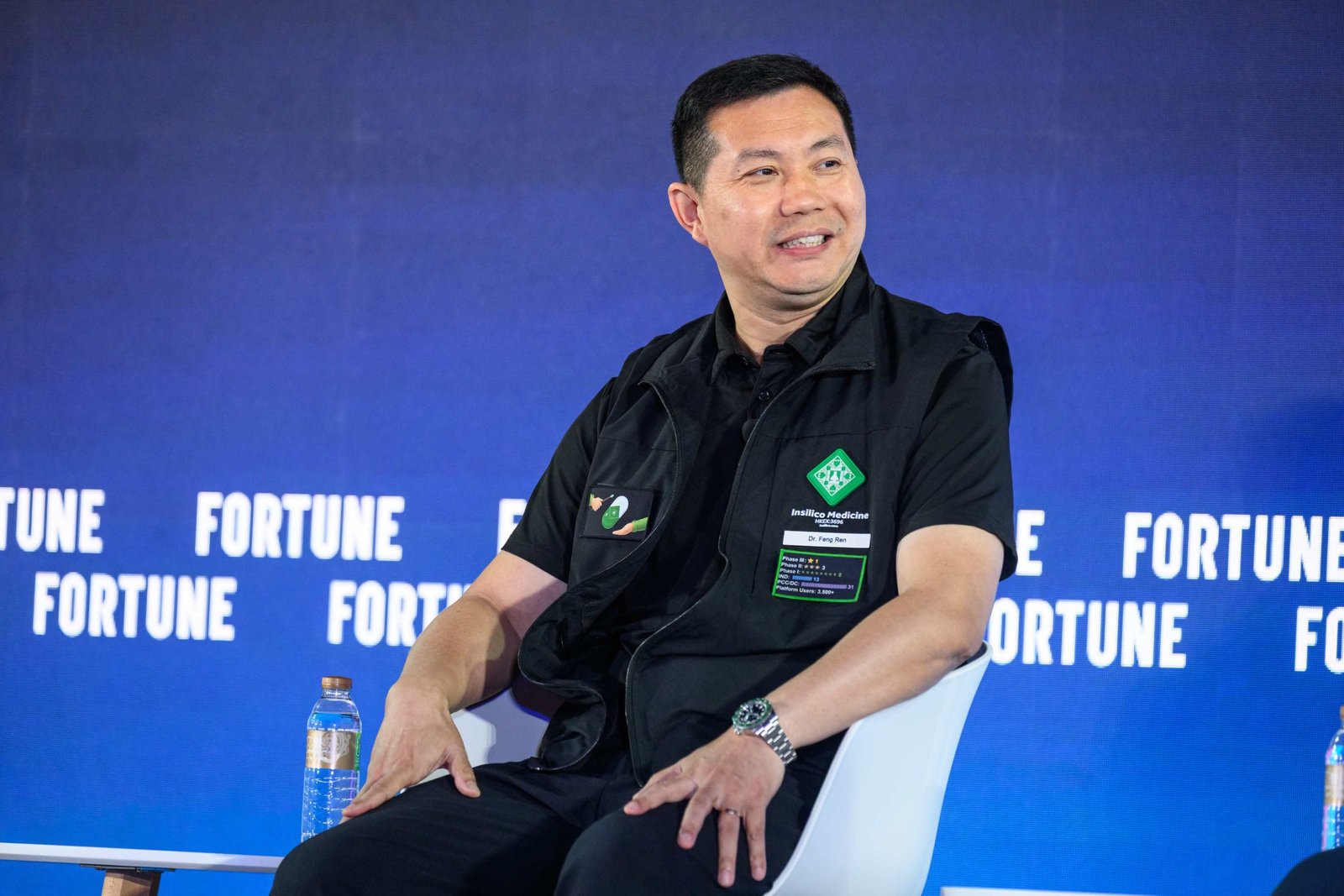
For Feng Ren, Co-CEO, Chief Scientific Officer and Head of Drug R&D at Insilico Medicine, the next phase of AI-enabled drug discovery centres on combining multidimensional data analysis with human expertise. His perspective draws on the company’s discovery programmes and the progression of its AI-enabled candidates into clinical trials.
In this interview, Feng Ren discusses where AI is delivering tangible value, what separates credible platforms from speculative promises, and how Asia’s research and development ecosystem could support the next phase of biopharma innovation.
Where is AI already delivering the most tangible value in drug discovery today?
I believe AI is already proving its value in the earliest stages of drug discovery, especially in target identification and molecule design.
On one level, it drives a massive leap in productivity. Where traditional R&D historically required four to five years to synthesise and test thousands of compounds, AI-enabled workflows can achieve superior lead candidates in just 12 to 18 months by synthesising and testing only 60 to 200 molecules.
More importantly, AI brings innovation from scratch. Humans rely on linear thinking and are constrained by cognitive limits, whereas AI can analyse multi-omic datasets simultaneously to uncover hidden biological connections. By processing vast chemical spaces without human bias, machine learning allows researchers to challenge “undruggable” targets and design entirely novel molecular structures.
AI transforms drug discovery from a process of high-risk trial and error into a more predictable, data-driven science.
What have Insilico Medicine’s clinical programmes taught you about AI’s real impact on R&D timelines and decision-making?
By nominating 33 preclinical candidates since 2021, Insilico has demonstrated that its AI-driven platform, R&D capability and workflow can cut preclinical discovery timelines by around 60% and reduce associated costs to just one-tenth of traditional budgets.
Among Insilico’s portfolio, 13 of the 33 candidates received IND approval or clearance. Rentosertib, currently in Phase III trials for idiopathic pulmonary fibrosis, stands as a landmark example of a drug entering late-stage clinical evaluation with both an AI-discovered target and an AI-designed molecular structure. Similarly, garutadustat, an innovative small molecule designed with AI and currently in a Phase II trial for inflammatory bowel disease, is being evaluated for safety and efficacy. Preclinical research on both programmes has been published in Nature Biotechnology.
Ultimately, these milestones demonstrate that the true value of AI lies not in replacing human expertise, but in augmenting it. Traditional R&D relies entirely on human experience and knowledge, which are inherently limited by cognitive bandwidth and linear thinking. The integration of AI enables high-throughput, multidimensional data analysis, thereby creating a hybrid decision-making model: AI handles complex optimisation tasks, while humans serve as decision-makers.
This synergy produces a true “1 + 1 > 2” effect, significantly enhancing operational efficiency and innovation capabilities throughout the entire R&D lifecycle.
What separates a credible AI drug discovery platform from one driven mainly by hype?
The market correction between 2022 and 2023 served as a critical turning point for the biotechnology sector, effectively clearing out market hype and leaving behind platforms capable of delivering repeatable, tangible value.
During the peak hype cycle of 2018 to 2020, an influx of capital and talent created a bubble populated by teams that relied heavily on compelling narratives but lacked the capability to generate real-world assets. The subsequent industry downturn forced a necessary rationalisation, eliminating or consolidating companies that could not validate their technology through actual scientific output.
What separates a credible AI drug discovery platform from a speculative one is the ability to consistently drive operational efficiency while delivering validated clinical outcomes. Credible platforms prove their worth not through theoretical models, but by reliably compressing discovery timelines, lowering unit costs, and advancing novel molecules into late-stage human trials.
When computational predictions regularly yield molecules with strong safety profiles, robust bioavailability, and peer-reviewed scientific validation, AI ceases to be an overhyped promise and becomes an indispensable engine for pharmaceutical innovation.
How do you see AI changing precision medicine and target discovery over the next few years?
The paradigm shift in drug discovery is accelerating towards pharmaceutical superintelligence, transitioning AI from a transactional enablement tool into an autonomous co-decision-maker across the end-to-end R&D value chain.
While current generative algorithms serve as foundational engines to streamline data processing and candidate validation, the rapid integration of advanced biological foundation models and multimodal large language models is elevating AI into a decisive leadership role—one capable of formulating therapeutic strategies with unprecedented biological precision.
By shifting from accelerating isolated workflow steps to steering high-stakes clinical decision-making, AI will fundamentally redefine precision medicine. It is moving the industry away from broad-spectrum disease management towards the design of targeted, first-in-class therapies for previously intractable diseases.
Ultimately, this emerging era of pharmaceutical superintelligence promises to expand the druggable universe far beyond its traditional boundaries, systematically unlocking novel biology to address critical unmet medical needs worldwide.
What role can Asia play in the next phase of AI-enabled biopharma innovation?
While Western ecosystems historically held an advantage in traditional drug discovery, the emergence of AI levels the playing field, placing Asia on equal footing with the US and Europe in the global biopharma landscape.
Asia’s edge lies in its end-to-end industry ecosystem. Supported by robust digital infrastructure, a world-class network of CROs and CDMOs, and vast clinical trial resources, the region enables AI platforms to validate digital predictions in wet labs and clinical sites with unmatched speed and cost-efficiency.
Crucially, Asia is positioned to deliver the world’s first end-to-end commercial validation for AI drug discovery. With flagship assets like Insilico’s rentosertib progressing through a Phase III trial, Asia may achieve the first global proof of concept for an AI-identified target and AI-designed molecule moving from algorithm to market approval.