PARP inhibitors have transformed the treatment landscape for cancers such as ovarian and breast cancer, particularly in tumours with defects in DNA repair. However, the emergence of drug resistance remains a major challenge, limiting the long-term effectiveness of these therapies. A new study has identified nucleophagy, a selective form of autophagy, as a previously unknown mechanism through which cancer cells evade PARP inhibitor treatment.
The research highlights the role of TEX264, a protein that helps cancer cells remove and degrade PARP1 trapped on DNA following treatment. By clearing these toxic DNA-protein complexes, the pathway enables tumour cells to tolerate the damage caused by PARP inhibitors and survive treatment. The findings also point to TEX264 as a potential therapeutic target and biomarker, with analysis of the SCAN-B cohort suggesting an association between TEX264 expression and long-term survival in patients with aggressive breast cancer.
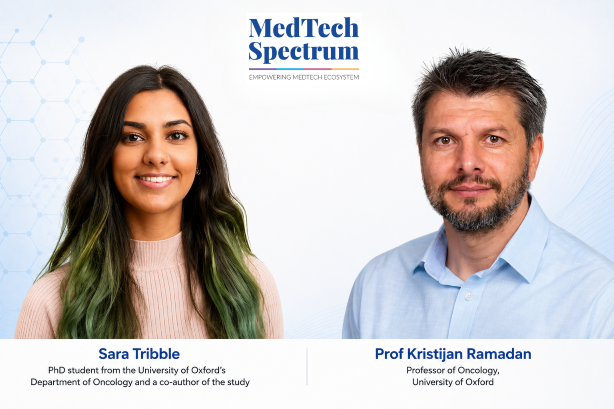
In this interview with MedTech Spectrum, Sara Tribble, PhD student at the University of Oxford’s Department of Oncology and co-author of the study, and Prof Kristijan Ramadan discuss how TEX264-mediated nucleophagy drives PARP inhibitor resistance, why selectively targeting this pathway could offer a more precise therapeutic approach, and how the findings could inform future combination treatments and biomarker-guided strategies for ovarian and breast cancers.
Your study has identified a previously unknown mechanism through which cancer cells develop resistance to PARP inhibitors. Could you explain how this mechanism works and how it differs from previously known resistance mechanisms?
Our research identifies nucleophagy – a form of selective autophagy – as a previously unknown mechanism through which cancer cells survive and develop resistance to PARP inhibitors. This pathway utilises TEX264 to physically clear trapped PARP1 from DNA and deliver it to cellular structures called lysosomes for degradation. This differs from previously known resistance mechanisms, which typically involve secondary genetic mutations in the BRCA/HR genes that restore DNA repair, upregulation of drug efflux transporter proteins like ABCB1 that pump medications and toxins out of cells, or mutations in PARP1 that prevent the inhibitor from trapping the protein in the first place. Unlike those mechanisms, nucleophagy acts as a “bypass” that allows cells to tolerate and remove the lethal protein-DNA aggregates caused by the drug.
The research found that tumours can hijack a protein involved in clearing DNA-damaging molecules. What role does this protein play in enabling cancer cells to survive PARP inhibitor treatment?
The protein hijacked by tumours is TEX264. In cancer cells undergoing PARP inhibitor treatment, TEX264 interacts with the trapped PARP1 and facilitates its removal and destruction. By clearing these physical barriers to DNA replication, TEX264 prevents catastrophic genome instability and the formation of toxic DNA-protein aggregates, effectively enabling the cancer cell to survive what would otherwise be a lethal dose of treatment.
Why could this newly identified mechanism be easier to target therapeutically than other known pathways associated with PARP inhibitor resistance?
This mechanism may be an easier therapeutic target because specifically inhibiting the nucleophagy of trapped PARP1 (via TEX264) could overcome resistance while avoiding the broad effects and toxicity associated with generalised autophagy inhibitors like chloroquine. Hence, targeting TEX264 provides a more precise way to re-sensitise resistant tumors without harming healthy cells.
Your findings have particular relevance for ovarian and breast cancer patients, among whom PARP inhibitor resistance is a significant challenge. How could this discovery potentially influence future treatment strategies for these cancers?
This discovery suggests that combination therapies – pairing PARP inhibitors with drugs that block TEX264-initiated autophagy – could be a powerful strategy to prevent or overcome resistance in ovarian and breast cancers. By preventing the clearance of trapped PARP1, these combinations can re-sensitise tumors that have already become resistant to standard PARP inhibitor treatment, significantly extending the duration of treatment effectiveness for these cancers.
The study identified a link between levels of the protein and survival outcomes among patients with aggressive breast cancer in Sweden. Could this protein potentially serve as a prognostic biomarker or help guide treatment decisions in the future?
Analysis of the SCAN-B cohort in Sweden provides strong evidence that TEX264 expression can serve as a biomarker. In patients with the most aggressive form of breast cancer called triple-negative breast cancer, low levels of TEX264 were associated with approximately 28 per cent better long-term survival over 10 years. This correlation indicates that high TEX264 levels actively promote tumor survival and treatment resistance, making it a valuable prognostic tool for guiding clinical treatment decisions.
What are the next steps in translating these findings from cancer cell experiments and clinical data analysis into potential therapies, and what challenges must be addressed before this mechanism can be targeted in clinical practice?
Translating these findings will involve the development of small-molecule inhibitors specifically targeting TEX264 or its interactions within the nucleophagy pathway. Clinically, the primary challenge is overcoming the broad and mixed responses seen with current autophagy-targeting drugs and ensuring that new therapies can effectively target the selective nucleophagy of DNA lesions without causing excessive toxicity.