UltraGreen.ai Limited highlighted the continued expansion of fluorescence-guided surgery (FGS) across its international markets, supported by growing clinical adoption and regulatory approvals in new territories. The breadth of clinical interest is reflected in the programme of the 17th International HepatoPancreato-Biliary Association (IHPBA) World Congress, the flagship global meeting for liver, pancreatic and biliary surgery, taking place in Singapore from 28 to 31 October.
Across the wider scientific programme, more than 40 presentations, posters and surgical videos address indocyanine green (ICG), reflecting its relevance across a range of surgical applications. Held every two years, the congress brings together surgeons, physicians, researchers, trainees and industry partners from around the world. International experts are presenting on the use of ICG in liver transplantation, liver resection, pancreatic surgery and biliary procedures, alongside research exploring fluorescence quantification and newer targeted imaging technologies.
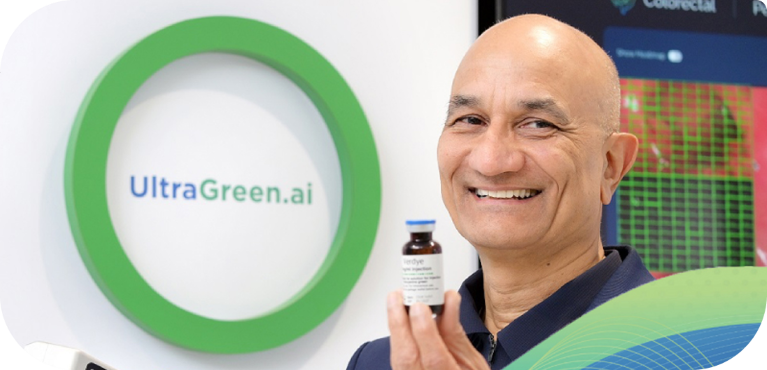
Often termed the “GPS of surgery”, FGS enables clinicians to visualise structures and assess tissue perfusion during procedures, providing additional information to support surgical decisions. UltraGreen’s Verdye (indocyanine green for injection) is a widely used fluorescence imaging agent in this field. International expertise across liver and hepatobiliary surgery in Singapore is hosting the IHPBA World Congress for the first time, bringing international surgical expertise to a region with a substantial liver cancer burden.
Asia accounts for approximately 70 per cent of new liver cancer cases worldwide, making the exchange of clinical experience and advances in surgical practice particularly relevant. A dedicated symposium, “IHPBA Meets ISFGS”, taking place on Thursday 29 October at 08:00 Singapore time, will bring together leading clinicians to discuss how fluorescence imaging informs decisions in hepatobiliary and pancreatic surgery.
The session serves as an opportunity for Singapore and regional surgical teams to share experience with international experts and discuss established and emerging applications of fluorescence-guided techniques. Key contributors include Concepción Gómez-Gavara from Spain, presenting on the impact of ICG during liver transplantation; Takeaki Ishizawa from Japan, discussing novel fluorescence probes for pancreatic leak identification and cancer treatment; Alexander Vahrmeijer from the Netherlands, presenting on ICG and targeted fluorescence imaging for real-time surgical decision-making; and Catherine Teh from the Philippines, addressing consensus on fluorescence imaging in HPB surgery. The session will be chaired by Dr Catherine Teh and Professor Brian Goh from Singapore, reflecting the contribution of international and regional expertise to the development of fluorescence-guided practice.