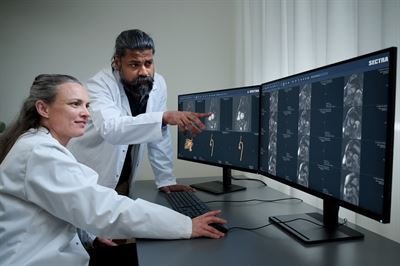

HOPPR has introduced the beta version of its FS MSK Whole-Body Narrative Model, a vision-language foundation model designed to generate draft findings for musculoskeletal radiograph reports.
The software processes up to three views per study and provides a starting point for developers building radiology reporting and image-based workflow applications. It is available for evaluation and feedback, is not FDA-cleared, and is not intended for diagnostic use.
The model covers 27 body parts across the spine, thorax and chest wall, upper extremities, pelvis and lower extremities. HOPPR trained it on approximately 674,000 proprietary outpatient musculoskeletal studies, with coverage balanced across anatomical regions.
Its output concentrates on abnormalities rather than descriptions of normal anatomy. Evaluation spans 26 finding categories, including fractures, degenerative joint and spinal changes, alignment, soft tissue, bone quality, lesions and implanted hardware.
Organisations can access the model through HOPPR’s Forward Deployed Services and Foundry API to test outputs against their own data. The services team supports customisation, labelling workflows, integration and validation within each organisation’s environment.
HOPPR describes the model as a software component rather than a medical device. Its beta conditions exclude use in products or workflows intended for commercial distribution or operational deployment. Developers remain responsible for validating final products and obtaining applicable regulatory authorisations.
The model’s initials honour Dr Florence Ada Stoney, an early pioneer of radiology in the United Kingdom.