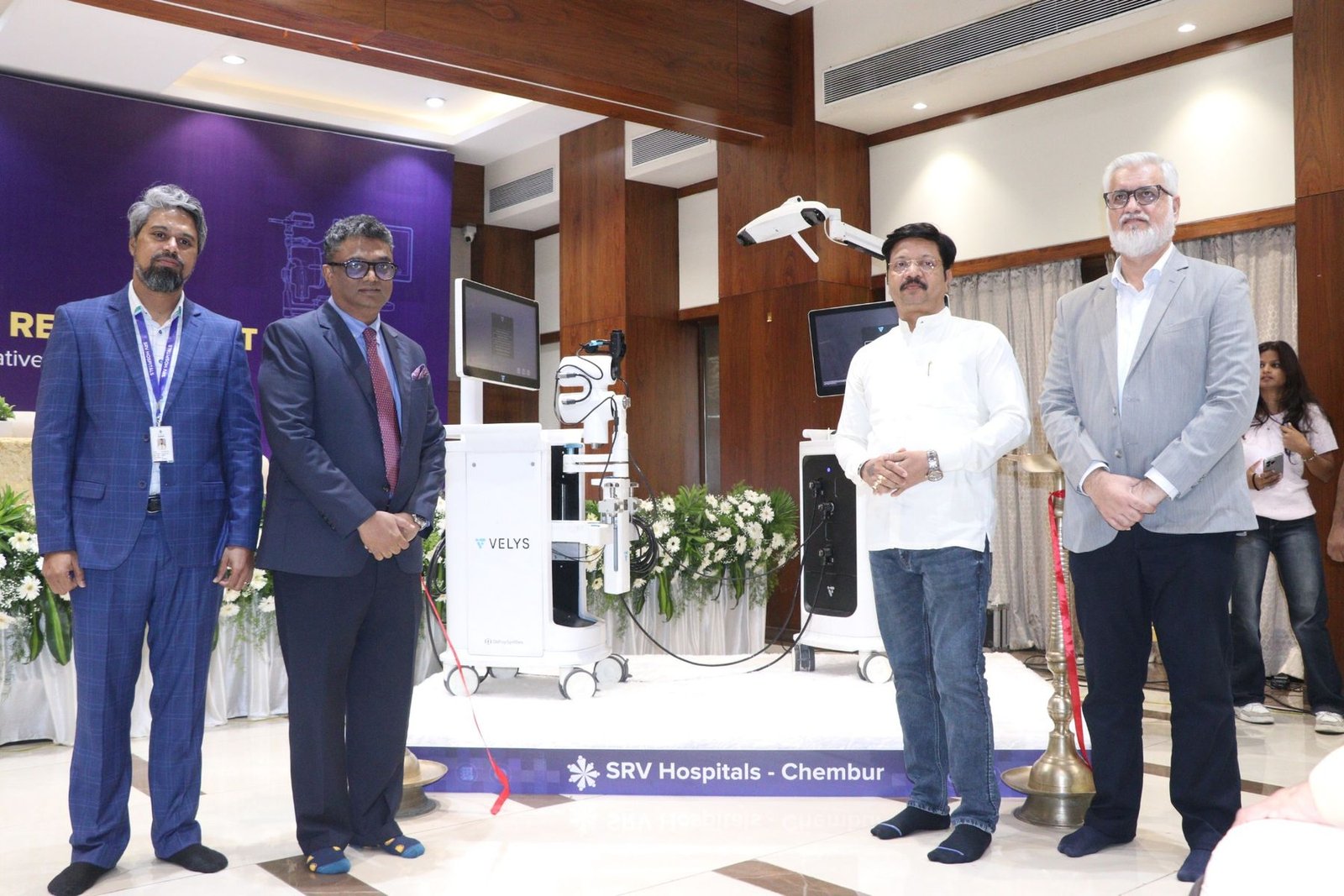
SRV Hospitals, Chembur, has launched an Advanced Robotic-Assisted Joint Replacement Centre of Excellence in Mumbai using the VELYS Robotic-Assisted Solution.
The centre strengthens SRV Hospitals’ joint replacement programme by combining robotic-assisted surgery with specialist orthopaedic care and structured rehabilitation under its broader Mobility Restoration Programme.
The facility was inaugurated in the presence of Mangesh Kudalkar, Member of the Maharashtra Legislative Assembly, alongside medical professionals, civic representatives, community leaders and members of the SRV Hospitals leadership team.
The VELYS Robotic-Assisted Solution provides surgeons with real-time information during knee replacement procedures and supports personalised surgical planning based on individual patient anatomy.
The platform is CT-free, meaning patients do not require an additional pre-operative CT scan for surgical planning.
SRV Hospitals said the technology is designed to support rather than replace surgeon decision-making, with clinical judgement remaining central to patient selection, treatment planning and determining whether robotic-assisted surgery is appropriate.
“Robotics is an important advancement in joint replacement because it allows surgeons to plan and execute procedures with a high degree of personalisation and precision. But the real value of technology is seen in what it helps the patient regain,” said Dr Abhay Vispute, Founder-Director of SRV Hospitals.
“A successful joint replacement is not only about the procedure. It is about helping someone walk better, move with confidence and return to an independent life. That is the larger purpose behind this programme.”
The robotic-assisted service forms part of SRV Hospitals’ Mobility Restoration Programme, which includes preventive and conservative management, specialist orthopaedic evaluation, surgery where clinically indicated, structured rehabilitation and post-discharge follow-up.
Patients are supported by a multidisciplinary team including orthopaedic surgeons, anaesthetists, nurses, physiotherapists and rehabilitation professionals.
The hospital’s orthopaedic team also provides care across joint replacement, arthroscopy, sports medicine, shoulder conditions, foot and ankle disorders, spine care and rehabilitation.
Dr Shamim Khan, Zonal Head at SRV Hospitals, said rehabilitation and follow-up are intended to remain closely integrated with surgical treatment.
“Robotic technology gives our surgical teams an advanced tool for personalised joint replacement, but recovery does not end in the operation theatre. Rehabilitation, follow-up and the patient’s return to normal movement are equally important.”
He added that integrating these elements within a single programme is intended to provide a more coordinated approach to joint care and mobility restoration.
Joint pain associated with arthritis, ageing, previous injuries and other medical conditions can progressively affect activities including walking, climbing stairs, standing and maintaining independent mobility.
SRV Hospitals said conservative approaches such as medication and physiotherapy remain appropriate for some patients, while joint replacement may be considered following clinical assessment when these measures no longer provide sufficient relief.
The Mobility Restoration Programme is intended to match patients with the appropriate intervention according to disease stage, with robotic-assisted joint replacement available where clinically indicated.