
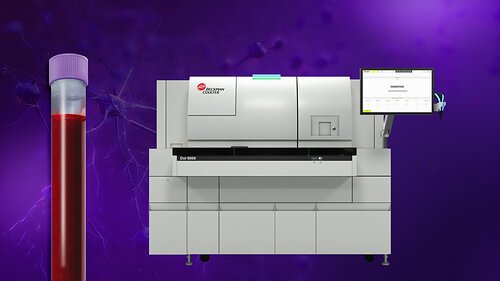
Beckman Coulter Diagnostics, a global leader in clinical diagnostics and a Danaher company, announced it received CE Mark under IVDR for its Access p-Tau217 assay, a blood test designed to support clinical evaluation of amyloid pathology in patients with signs and symptoms of cognitive decline. The company also introduced its high-specificity Access BD-pTau217 Research Use Only (RUO) assay at the Alzheimer's Association International Conference (AAIC) 2026 in London.
The CE Mark represents a significant milestone in expanding access to blood-based p-Tau217 testing in Europe and additional CE-recognizing markets, supporting laboratories and clinicians with a scalable, automated solution. Building on this clinical progress, the newly launched RUO assay is designed to further advance research into disease biology. Both assays are enabled by the DxI 9000 Immunoassay Analyzer, ensuring laboratories can efficiently manage clinical and research tests on a single high-precision analyser.
Scaling Access to Alzheimer's Disease Blood Testing with CE-Marked, Automated p-Tau217 Assay
The new CE-marked assay measures phosphorylated tau (p-Tau217), a well-established biomarker associated with Alzheimer's disease, enabling scalable assessment in routine clinical settings. Blood-based approaches can complement existing diagnostic pathways by offering a more accessible, operationally scalable method for evaluating Alzheimer's-related pathology within laboratory workflows.
"Our CE-marked Access p-Tau217 assay brings a well-established Alzheimer's biomarker into routine clinical workflows, enabling laboratories to scale blood-based evaluation of disease pathology more efficiently," said Dr Chris Bird, Chief Medical Officer at Beckman Coulter Diagnostics. "By making testing more accessible and operationally scalable, it helps integrate biomarker-based assessment into everyday clinical practice."
Beckman Coulter Diagnostics developed the Access p‑Tau217 assay using AlzPath's antibody, cited in more than 200 peer‑reviewed publications, underscoring strong scientific validation. As demand for Alzheimer's disease diagnostics grows, blood‑based testing will play an increasingly important role in enabling consistent evaluation across clinical settings. This milestone marks the translation of validated biomarker science into Beckman Coulter's first clinical, blood‑based assay for amyloid pathology in patients with signs and symptoms of cognitive decline, accelerating the path from research insight to real‑world use.
In addition to the CE-marked IVD assay, Beckman Coulter Diagnostics is introducing its Access BD-pTau217 RUO assay, designed to selectively detect the short form (or low molecular weight) pTau217 in blood samples using the DxI 9000 Analyser. By targeting the short form of pTau217 originating in the brain, the new research assay is designed to enhance biological specificity and provide precise characterisation of central nervous system phosphorylated Tau217 signals in blood.
"By focusing on brain-derived pTau217, this assay is designed to deliver a higher level of biological specificity, helping researchers more precisely identify tau pathology in blood most relevant to their studies," said Dr Jeremiah Hinson, Chief Scientific Officer for Neurodegenerative Diseases at Danaher. "This increased specificity can bolster confidence in studying Alzheimer's disease staging and support new insights into the biological inflexion points that define how the disease evolves."