Across Asia, healthcare systems are facing rising pressure from ageing populations, growing chronic disease burdens, workforce constraints and increasing medical costs. As care needs become more complex, healthcare leaders are paying closer attention to how services can be organised around the patient journey rather than around institutions, diseases or individual care settings.
Patient-centred care is increasingly being viewed not only as a way to improve patient experience, but also as a strategy to build more sustainable health systems. This shift is also placing greater emphasis on prevention, primary care, care coordination, digital health, patient navigation and sustainable healthcare financing.
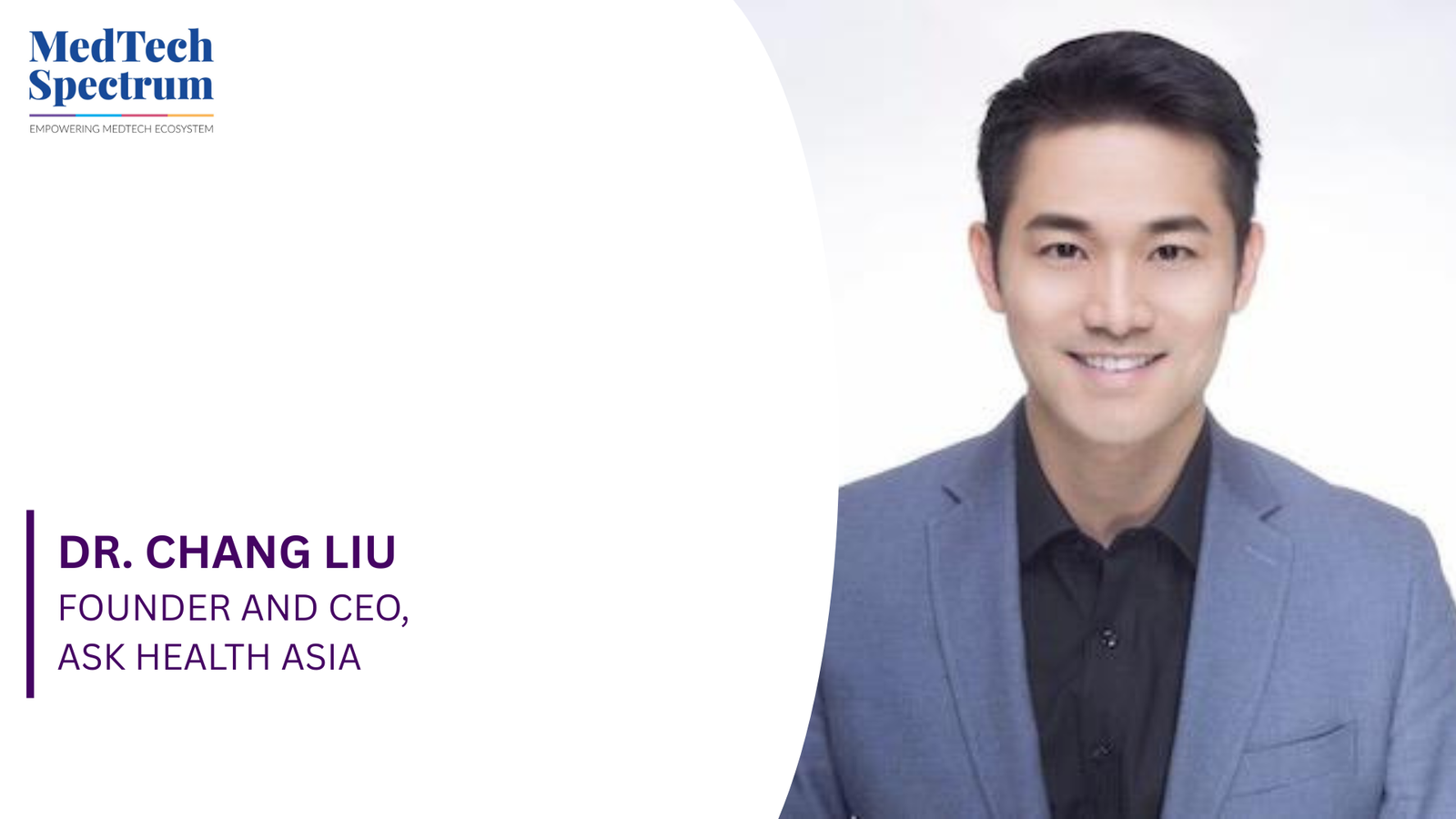
In this interview, Dr. Chang Liu, Founder and CEO of ASK Health Asia, discusses why patient-centred care is becoming more important across Asia, how patient voice can strengthen value-based care, and what healthcare leaders should prioritise over the next five to ten years.
Across Asia, healthcare systems are facing growing pressures from ageing populations, rising chronic disease burdens, and increasing costs. Why is patient-centred care becoming a strategic priority for healthcare systems today?
Patient-centred care is a strategic priority because it helps to preserve health system sustainability. Across Asia, we're seeing a convergence of long-term trends. Populations in APAC are ageing rapidly with the number of people over 60 in the region expected to double in the next few decades. Chronic diseases also now account for the majority (80%) of healthcare demand across Asia, and many countries are simultaneously dealing with workforce shortages and rising medical costs. At the same time, expectations of healthcare have changed. People don't simply want access to treatment alone, and they have started expecting care that is coordinated, convenient and delivers better long-term outcomes.
In that environment, healthcare systems can no longer afford to operate as a series of disconnected services. The focus is shifting from treating episodes of illness to managing health over an entire lifetime. That means investing more in prevention, strengthening primary care, improving care coordination and making better use of digital technologies. Patient-centred care is one important part of that broader transformation because it helps ensure these reforms are designed around how people experience healthcare, rather than how institutions are organised.
At the inaugural Voices for Health Summit, held this past June in Singapore, one message emerged consistently across governments, providers, patient organizations, and industry: patient-centred care is no longer simply about improving patient experience. It is becoming a strategy for building more sustainable health systems. When healthcare is designed around the patient journey, from prevention and early diagnosis to treatment and long-term follow-up, it reduces fragmentation, supports better outcomes, and makes better use of limited healthcare resources.
Despite widespread recognition of the importance of patient engagement, what are the biggest barriers preventing healthcare systems from effectively incorporating patient perspectives into decision-making and care delivery?
I think one of the biggest barriers is that patient engagement is still too often treated as consultation rather than partnership. Many organisations recognise the importance of listening to patients, but meaningful engagement means involving them much earlier in the process and giving them genuine influence over decisions. Patients should be recognised not simply as beneficiaries of healthcare, but as knowledge holders whose lived experience complements clinical and technical expertise.
A second challenge is that many healthcare systems remain organised around institutions, diseases, or professional silos, rather than around a patient's journey. Patients are often expected to navigate fragmented services, coordinate their own care, and transition between providers with limited support. At our Voices for Health Summit, stakeholders consistently identified patient navigation and continuity of care as critical gaps that must be addressed if we want to improve outcomes and patient experience
Finally, we need to move beyond measuring patient engagement by the number of consultations or advisory meetings held. The more important question is whether patient perspectives influence decisions – whether they shape research priorities, improve care pathways, inform health technology assessment, or lead to better access and outcomes. Achieving this also requires investing in the capabilities of both healthcare professionals and patient organisations, as well as creating governance structures that embed patient voice as a routine part of decision-making rather than an occasional exercise.
Many healthcare systems are exploring more integrated and value-based models of care. How does incorporating the patient voice contribute to better health outcomes and more sustainable healthcare systems?
Value-based care is fundamentally about achieving outcomes that matter to patients, not simply delivering more healthcare services. To understand what those outcomes are, healthcare systems must engage the people living with those conditions every day.
Patients bring knowledge that complements clinical expertise. They understand the practical realities of managing treatment, balancing work and family responsibilities, navigating financial pressures, and living with uncertainty. Those insights help shape better care pathways, more relevant outcome measures, and policies that reflect real-world needs.
One example discussed at our Summit was Taiwan's Cancer Drug Fund, where patient organisations helped translate lived experience into evidence that informed policy discussions around access to innovative medicines. Patient voice was not treated as anecdotal input—it became part of the evidence base.
Similarly, Singapore Cancer Society's Patient Journey and ‘7 Asks’ framework demonstrates how patient research can identify unmet needs across the entire care continuum, from prevention and diagnosis through survivorship and end-of-life care, allowing health systems to design services around what patients experience.
Improving healthcare outcomes often requires collaboration across policymakers, providers, patient groups, industry, and payers. What examples of successful cross-sector collaboration have you observed, and what lessons can other markets learn from them?
One encouraging shift across Asia is that collaboration is becoming much more outcome oriented. We're seeing governments, hospitals, industry and patient organisations working together on areas such as earlier diagnosis, digital health, health technology assessment and integrated care pathways, rather than approaching these issues independently. WHO has also increasingly emphasised multi-stakeholder collaboration as countries build stronger digital health ecosystems and more integrated models of care.
At country levels, Singapore is a great example. The Ministry of Health's Agency for Care Effectiveness (ACE) has established formal processes to involve patient organisations in health technology assessments that inform funding decisions. Rather than simply seeking feedback at the end of the process, ACE worked with patient groups to co-design participation frameworks, develop guidance materials, and build the capabilities needed for meaningful engagement. Today, patient perspectives are routinely incorporated into HTA evaluations, making funding decisions more reflective of lived experience as well as clinical and economic evidence.
Another example is Thailand, where the Health Intervention and Technology Assessment Program (HITAP) has long demonstrated the value of bringing together government agencies, researchers, clinicians and civil society to inform healthcare policy. Its collaborative model has helped shape decisions around universal health coverage, essential medicines and health innovation by ensuring that evidence generation and policy development happen in partnership rather than in isolation.
What these examples have in common is that they don't treat collaboration as a one-off consultation exercise. The lesson is that collaboration must be institutionalised. Sustainable partnerships require shared goals, clear governance, capability-building, and accountability, not simply goodwill.
Looking ahead, what key trends do you believe will shape the future of patient-centred healthcare across Asia over the next five to ten years, and what should healthcare leaders be prioritising today?
I see three major trends shaping the next decade.
First, healthcare will become more predictive and data-driven. Artificial intelligence, digital health and better use of health data will enable earlier diagnosis, more personalised interventions and smarter resource allocation. The priority will be ensuring these technologies are implemented responsibly and continue to earn the trust of both patients and healthcare professionals.
Second, care will increasingly shift beyond hospitals into primary care, community settings, and patients’ homes. As population age and chronic diseases become more prevalent, health systems must strengthen prevention, care coordination, and patient navigation to deliver more seamless, continuous care.
Third, sustainable healthcare financing will become one of the defining priorities for health systems across Asia. As demand for healthcare continues to grow, countries will need more innovative financing models that can improve access to innovation while maintaining long-term system sustainability. This will require closer collaboration between governments, payers, providers, patient organisations, and industry to design financing approaches that reflect the outcomes that matter most to patients.
At ASK Health Asia, this is one of our core priorities. Through the Voices for Health platform, we are bringing together stakeholders across the region to advance patient-centred health systems, with a particular focus on sustainable healthcare financing, innovative payment models, and strengthening collaboration across the entire patient journey. We believe no single organisation can solve these challenges alone, which is why we are committed to building a long-term regional coalition that can help shape practical solutions and drive lasting impact.