Researchers at the University of New Mexico School of Medicine have uncovered new insights into why glioblastoma, one of the deadliest forms of brain cancer, almost always returns despite aggressive treatment.
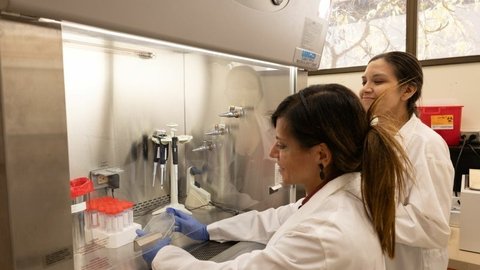
The findings, led by Sara G. M. Piccirillo, tenure-track assistant professor in the Department of Cell Biology and Physiology and a full member of the University of New Mexico Comprehensive Cancer Centre, point to a hidden reservoir of treatment-resistant cancer cells in a specific brain region known as the subventricular zone.
Glioblastoma has a five-year survival rate of only 7 per cent, significantly lower than the broader five-year survival rate of 33 per cent for all brain cancers combined, according to the National Cancer Institute.
According to Piccirillo, the persistently poor survival outcomes stem largely from the cancer’s tendency to recur after treatment.
“Recurrence doesn’t come from the tumour mass removed during surgery. It comes from the cells that remain behind and cannot be safely removed,” she said.
Her research focuses on understanding these residual glioblastoma cells, which survive surgery, radiation, chemotherapy and electric field therapy, later regenerating tumours that are often more resistant to existing treatments.
Earlier studies by Piccirillo demonstrated that glioblastoma tumours contain highly diverse populations of cancer cells, even within the same tumour mass. This cellular heterogeneity enables some cells to evade treatment while others are destroyed.
In a study published in Cell Reports in January 2025, titled Single-nucleus and spatial landscape of the sub-ventricular zone in human glioblastoma, Piccirillo’s team found that in 65 per cent of glioblastoma patients, residual tumour cells persist in the subventricular zone.
The study identified this region as a critical reservoir for glioblastoma recurrence.
The researchers also uncovered another important contributor to tumour regrowth: microglia, the brain’s resident immune cells.
While microglia typically protect the brain by clearing waste and defending against disease, Piccirillo’s research found that within the subventricular zone, they instead appear to support glioblastoma growth.
The team is now investigating how glioblastoma cells in the subventricular zone differ at the molecular and genetic level from those found in primary tumour tissues.
The goal is to identify why these residual cells respond differently to therapy and to develop personalised treatment strategies aimed at preventing recurrence.
The findings could pave the way for more targeted interventions for glioblastoma, offering hope for improving outcomes in a disease that remains one of oncology’s most difficult challenges.