Asia's ageing population is placing increasing pressure on healthcare systems to move beyond treating illness and focus on preventing disease. As more people live longer, healthcare providers and insurers are exploring how digital health, artificial intelligence and behavioural science can support earlier intervention, improve access to care and reduce long-term healthcare costs.
Insurers are also playing an increasingly important role in this transition, moving beyond financing medical treatment to supporting preventive care, chronic disease management and more connected healthcare services.
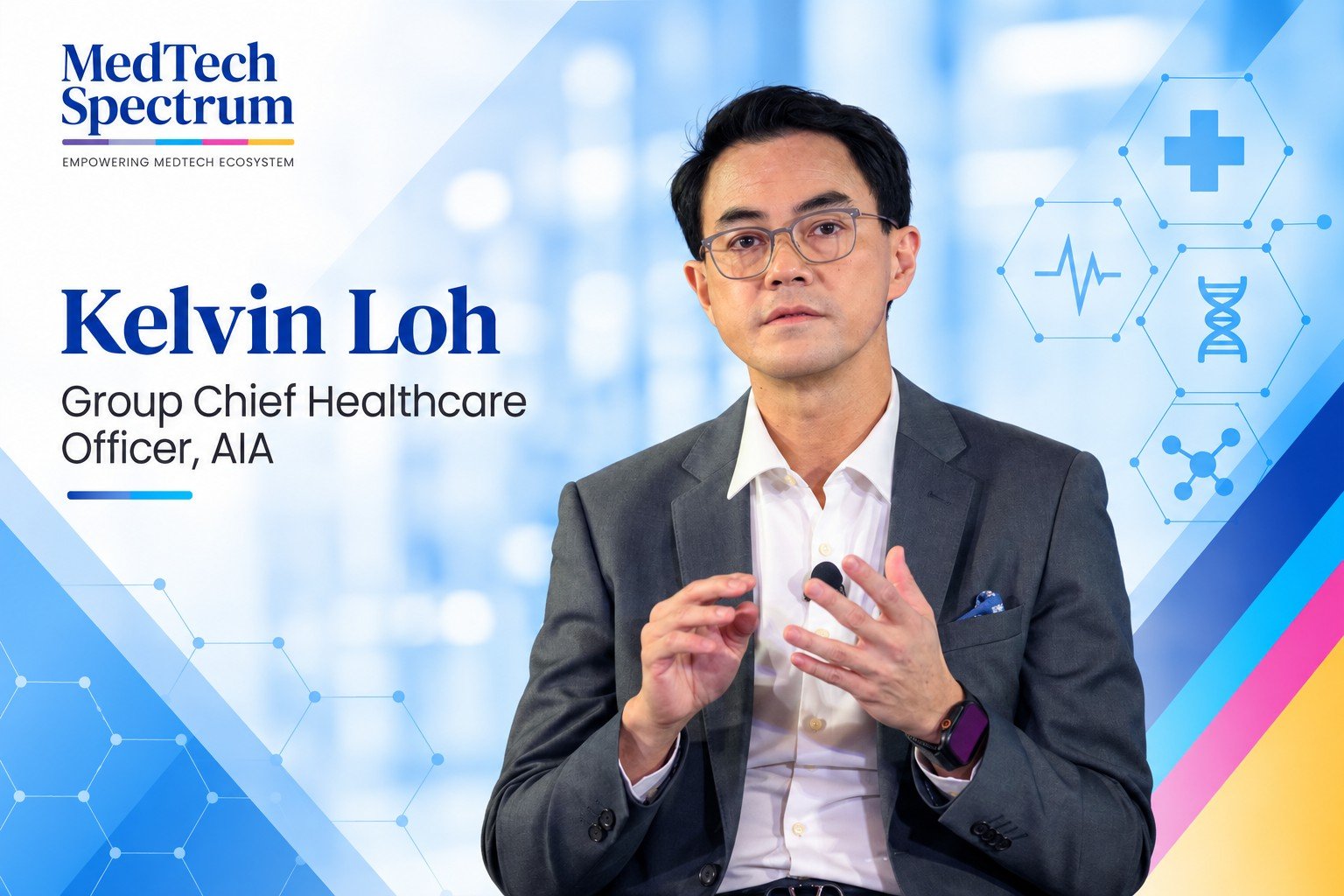
In this interview, Kelvin Loh, Group Chief Healthcare Officer at AIA, discusses how Asia's healthcare systems can improve health outcomes through prevention, digital technologies and stronger collaboration between insurers, healthcare providers and technology companies.
How is Asia's ageing population changing the case for preventive healthcare?
Asia is living longer, but not necessarily healthier. The challenge is no longer simply extending lifespan, but extending healthspan so people can remain healthy, independent and productive for longer.
Many of the conditions we associate with ageing, including stroke, diabetes and even dementia, are influenced by modifiable risk factors. Prevention therefore offers one of the biggest opportunities to improve future health outcomes.
Healthcare systems have historically been designed around treating illness. As populations age, we need to intervene earlier and place much greater emphasis on prevention before disease takes hold.
The future of healthcare is not just better treatment, but better prevention. AIA Vitality shows how technology, data and behavioural science can work together to help people make healthier choices every day, long before they become patients.
What role can insurers play in scaling digital health and remote care across APAC?
At AIA, we see digital tools as a way to turn engagement into action, whether that's encouraging physical activity, health screening, chronic disease management or earlier intervention.
Insurers are uniquely positioned because we engage with millions of people over many years. That gives us an opportunity to move beyond financing healthcare and help people stay healthier in the first place.
The real value of digital health is not technology for its own sake. It's using data, behavioural science and incentives to help people make better health decisions every day.
What evidence do insurers need before adopting new healthcare technologies at scale?
Innovation must demonstrate real-world value. The key question is whether it improves health outcomes, enhances the patient experience and helps make healthcare more affordable.
Being innovative is not enough. We need evidence that technology leads to better decisions, better care pathways and ultimately better outcomes for patients.
How can insurers, hospitals and technology companies build more connected care pathways?
Patients often experience fragmented care because the healthcare system itself is fragmented. Better integration starts with better data and greater transparency across the patient journey.
The future of healthcare depends on stronger alignment between providers, payors and technology partners. When incentives are aligned, patients are more likely to receive the right care, at the right place and at the right time.
Which technologies do you see having the biggest impact on healthcare access and affordability in Asia?
AI, advanced diagnostics and connected health devices all have enormous potential, particularly when they help identify risks earlier and personalise care.
The breakthrough will not come from any single technology. It will come from combining technology, data and behavioural science to help people prevent disease and manage their health more effectively.
The biggest opportunity for Asia is to use technology to make quality healthcare more accessible and affordable at scale as populations continue to age. Ultimately, the value of AI and digital health will be measured by whether it helps people live healthier, longer and better lives.