Healthcare startups are increasingly turning to artificial intelligence, simulation and digital platforms to accelerate the development of medical technologies and deliver more personalised and predictive care. However, transforming innovative concepts into commercially viable and clinically relevant solutions requires access to advanced technology, secure data infrastructure, regulatory expertise and industry mentorship.
To support this ecosystem, Dassault Systèmes is bringing together its 3DEXPERIENCE Lab and OUTSCALE for Entrepreneurs programmes to provide healthcare startups with access to digital health innovation tools, virtual twin technologies, AI capabilities and sovereign cloud infrastructure. The collaboration is designed to help startups accelerate product development, test and validate solutions in secure digital environments, and address the complex cybersecurity, data protection and commercialisation requirements of the healthcare sector.
Virtual twins are also emerging as a significant technology in medical innovation, enabling researchers and healthcare professionals to model clinical solutions, simulate treatment approaches and support more personalised care. Combined with sovereign cloud infrastructure, these technologies could help create a trusted foundation for digital health and medical research while protecting sensitive patient data.
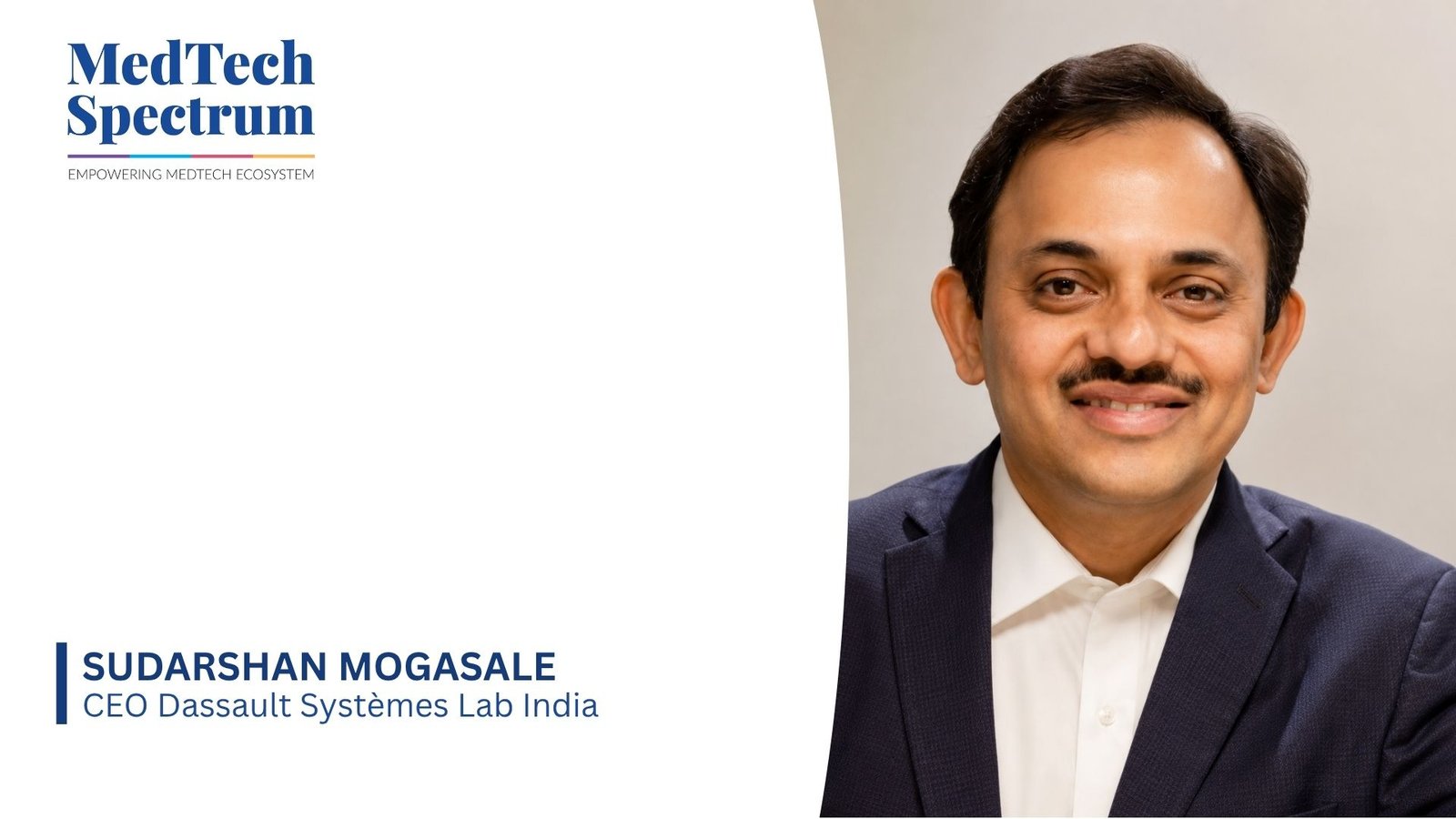
In this interview with MedTech Spectrum, Sudarshan Mogasale, CEO, Dassault Systèmes Lab India, Dassault Systèmes, discusses how healthcare startups can leverage AI, virtual twins and secure cloud technologies to accelerate innovation, navigate regulatory challenges and develop the next generation of medical solutions. He also shares his perspective on how the convergence of industrial AI and simulation could shape patient outcomes over the next five years.
What strategic opportunities does this collaboration create for healthcare startups developing next-generation medical solutions?
This collaboration provides healthcare startups direct access to a digital health innovation platform & ecosystem. Startups gain foundational mentoring and specialized technological tools. They can integrate artificial intelligence capabilities into new medical solutions. This initiative helps them build scalable, sustainable healthcare products. It aligns development with European data security standards.
How can startups leverage virtual twins on the 3DEXPERIENCE platform to accelerate product development and clinical validation while reducing costs?
Startups use AI-powered virtual twins on the 3DEXPERIENCE platform to model real-world clinical solutions. They test and validate these medical products inside a secure digital environment. This digital testing happens before clinical or industrial phases begin. Virtual optimization saves engineering time and development capital. It removes the necessity for physical iterations.
How do your AI capabilities and OUTSCALE’s sovereign cloud infrastructure help startups address data security and regulatory compliance?
Our artificial intelligence features process sensitive health data on OUTSCALE's sovereign cloud. The infrastructure provides full compliance with European data security regulations. It ensures that medical information remains protected. Startups receive trusted data environments for their operations. This setup safeguards patient information during digital health advancement.
How do the 3DEXPERIENCE Lab and OUTSCALE for Entrepreneurs programs help startups navigate complex cybersecurity and commercialisation requirements?
These accelerator programs offer priority access to forty years of industry expertise. The programs provide secure cloud foundations to meet cybersecurity requirements. Startups receive direct mentoring to transition from concepts to commercial products. This structured support resolves technical and legal hurdles. This helps entrepreneurs through regulatory frameworks and commercialization pathways.
How do you see sovereign cloud technologies shaping the future of digital health and medical research across Europe?
Sovereign cloud technologies establish a trusted baseline for medical research. They keep local healthcare data protected within European geographic boundaries. This infrastructure drives collaboration without sacrificing privacy. European entities can securely share research findings and patient data. It forms the foundation for digital health delivery.
Which emerging trends in AI and simulation do you believe will have the greatest impact on patient outcomes over the next five years?
The integration of industrial AI with virtual twins transforms patient outcomes. Simulating the human anatomy allows doctors to predict medical treatments. Personalized digital models improve surgical planning and drug delivery timelines. Routine administrative tasks disappear through automated workflows. This combination shifts medicine toward precise, predictive care models.