Artificial intelligence is expanding the role of cardiac CT beyond image acquisition and reconstruction, enabling clinicians to gain deeper insights into cardiovascular health and support more informed clinical decisions. From analysing plaque composition and luminal narrowing to assessing the functional health of the heart muscle, AI-powered imaging is creating opportunities for earlier and more comprehensive cardiovascular assessment. However, access to advanced cardiac imaging remains concentrated in large hospitals and specialised medical centres, highlighting the need for technologies that can be integrated into community-based healthcare settings.
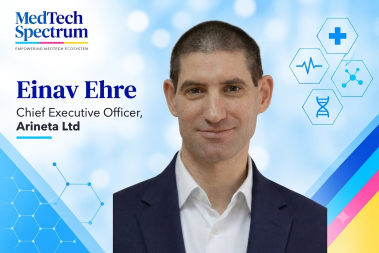
In this interview with MedTech Spectrum, Einav Ehre, Chief Executive Officer, Arineta Ltd, discusses how AI is reshaping cardiac CT workflows, strengthening clinical decision support and helping address accessibility challenges. She also examines the role of automation in simplifying imaging operations, the infrastructure and staffing requirements for wider adoption, and the developments expected to shape AI-powered cardiac imaging over the next three to five years.
Evolution of AI in cardiac imaging: AI is increasingly being integrated into cardiac CT workflows. How is its role evolving beyond image enhancement and reconstruction towards supporting clinicians in image interpretation, diagnosis, and clinical decision-making?
The first wave of AI in cardiac CT was focused on cleaner images, and now it’s moving into what clinicians can do with the information those images provide. AI-based imaging is helping cardiology practices move beyond identifying isolated blockages toward a more comprehensive view of cardiovascular health, including plaque composition, inflammation, luminal narrowing and the functional health of the heart muscle.
AI can also automate complex measurements and help clinicians assess scans more consistently across practices. The goal isn't to take clinical judgment out of the equation, but to give physicians better tools and more information to work with. I think of AI as an assistant: it standardizes expert-level precision and handles more of the analytical work, allowing physicians to focus on interpreting results and deciding what to do next.
Clinical decision support: How can AI-enabled cardiac CT help clinicians identify cardiovascular conditions, assess disease severity, and determine appropriate next steps for patients? What developments do you expect to shape this area over the next three to five years?
Determining whether a patient is at risk for a cardiac event takes more than knowing whether a blockage has begun to develop. While traditional cardiac CT has focused on identifying blockages, the addition of AI now gives clinicians a window into a patient's overall cardiovascular health, including the degree of luminal narrowing, the composition of plaque, the presence of inflammation, and the functional health of the heart muscle itself.
These changes are also reflected in clinical guidelines. The 2021 ACC/AHA Chest Pain Guidelines gave cardiac CT their highest recommendation, recognizing it as a frontline strategy for diagnosing coronary artery disease. This reflects the growing recognition that effective cardiovascular care requires a more complete picture of both anatomy and function. Instead of reacting to established obstructions, clinicians can characterize plaque stability and evaluate total vascular burden, helping inform earlier interventions before a patient experiences an acute event.
Looking ahead, we see the opportunity to get more information from every scan through increasingly automated measurements and more comprehensive cardiovascular assessments. The goal is to give clinicians more actionable information while keeping clinical judgment at the center of decision-making.
Democratising cardiac CT: Advanced cardiac imaging has traditionally been concentrated in large hospitals and academic medical centres. How can AI and technological advancements make cardiac CT more accessible to community cardiology practices and smaller healthcare facilities?
Historically, bringing cardiac CT out of a large hospital and into a community practice required significant investment in specialized equipment, infrastructure and personnel, putting it out of reach for many smaller practices.
Advances in scanner technology and AI are helping change that. Arineta combines a more compact imaging platform with AI-driven automation that standardizes image acquisition and reduces the operational complexity traditionally associated with cardiac CT. This makes it easier for community practices to bring advanced imaging in-house without needing the same resources as a major academic medical center.
Patients shouldn't have to travel to a major medical center to access advanced cardiac imaging or wait weeks for an assessment they could receive from their own cardiologist. Our goal is to make more comprehensive cardiovascular care accessible closer to home.
Infrastructure and workflow challenges: What are the key infrastructure, staffing, training, and workflow requirements for a community cardiology practice looking to establish in-house cardiac CT capabilities? How can technology providers address these challenges and make adoption more practical?
One of the biggest barriers to establishing cardiac CT capabilities is the need for specialized equipment and experienced personnel, particularly as imaging departments face staffing shortages.
AI can help address some of these challenges by building standardized imaging protocols directly into the equipment. For example, it can automate patient positioning and tailor scan parameters in real time, helping technologists of varying experience levels capture high-quality images on the first attempt and reducing repeat scans.
Built-in guidance also allows technologists to focus more on the patient experience rather than managing every technical aspect of the scan. Combined with a more compact imaging platform, these capabilities help reduce operational complexity and make in-house cardiac CT more practical for community practices.
Global adoption and market differences: Having worked across the US, Israel, and China, what differences have you observed in the adoption of cardiac CT and AI-enabled imaging across these markets? What lessons can healthcare providers and technology companies in other regions, including Asia, draw from these experiences?
In every market we work in, the core challenge is similar: cardiovascular disease remains one of the leading causes of death, while access to advanced cardiac imaging has traditionally been concentrated in large medical centers, limiting availability for patients in community settings.
In the U.S., we have seen a noticeable shift over the past year toward bringing cardiac CT closer to patients through community clinics and outpatient centers. This transition is improving access to cardiac CT and making advanced cardiac diagnostics more widely available.
At Arineta, we believe we are well positioned to support this transformation. Our dedicated cardiac CT system, with its compact design and smaller footprint, makes it easier to bring advanced cardiac imaging into community-based settings, beyond traditional large hospital environments.
We believe this trend will continue and expand globally, including across Asia. As technology becomes more accessible, affordable, and easier to integrate into existing healthcare settings, cardiac CT and AI-enabled imaging will increasingly move beyond major hospitals and into community-based care.
The key lesson for healthcare providers and technology companies is that innovation should not only focus on developing advanced technology, but also on making it practical, accessible, and economically viable in the settings where patients receive care.
Future of cardiac imaging: What are the major technological and clinical milestones that will define the next phase of AI-powered cardiac CT? How does Arineta plan to contribute to this evolution, particularly in expanding access to advanced cardiac imaging beyond tertiary care centres?
The next phase of cardiac imaging will be defined by the ability to get more information from every scan while making advanced diagnostics more accessible.
Cardiac care is still largely reactive, with many patients receiving a diagnosis or intervention only after symptoms or a cardiac event occur. As the leading cause of death in the U.S., heart disease underscores the need for a more proactive approach. Advances in cardiac imaging and AI are helping shift that model by giving providers more information to identify and manage cardiovascular conditions earlier, potentially before they lead to a serious event.
Arineta plans to contribute to this evolution by expanding access to advanced cardiac imaging beyond major medical centers and into community practices across the country. By making these capabilities more accessible, we can help more patients receive comprehensive cardiovascular assessments closer to home, including those who might otherwise face barriers to accessing this level of care.