Preconception health is emerging as a critical yet often overlooked pillar of maternal and child healthcare, with growing evidence highlighting its long-term impact on pregnancy outcomes and the health of future generations. A recent study published in The Lancet introduces a global framework for preconception health monitoring, aiming to shift healthcare systems from a reactive, pregnancy-focused model to a more proactive, preventive approach.
Developed with contributions from researchers at KK Women’s and Children’s Hospital, Maternal and Child Health Research Institute and the University of Southampton, the framework addresses longstanding gaps in maternal healthcare, including the lack of standardised indicators, fragmented data systems, and limited integration of social and behavioural factors. Notably, the study incorporates perspectives from both healthcare professionals and the public, broadening the scope of preconception care to include mental health, financial stability, and access to support systems.
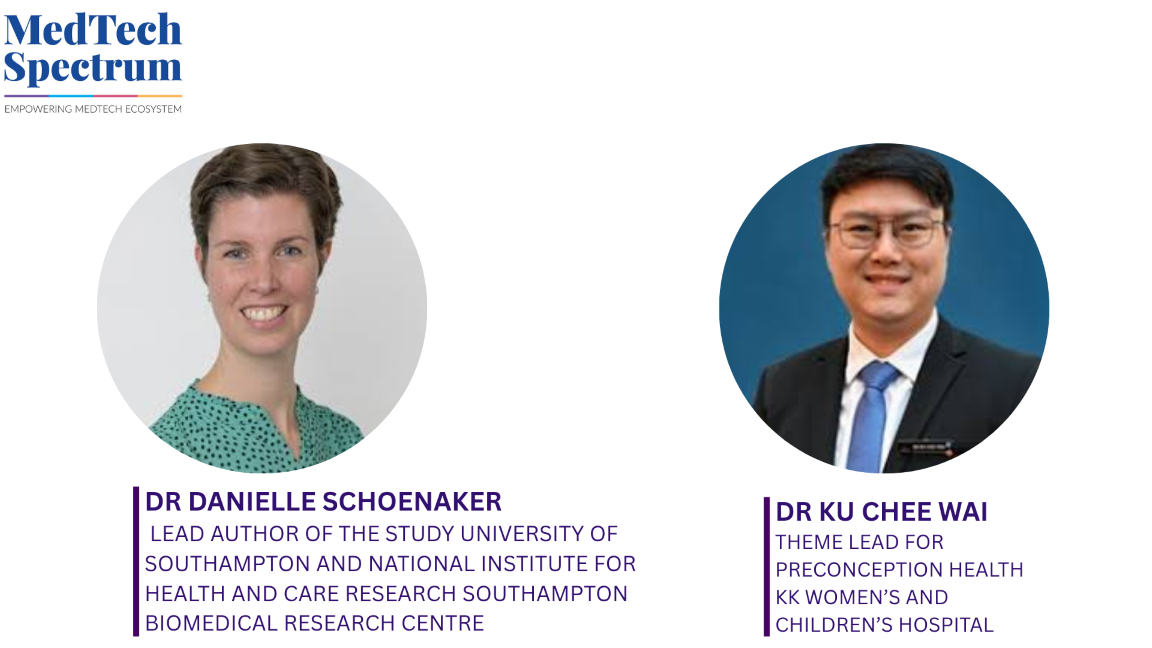
As global health systems grapple with rising risks such as obesity, diabetes, and mental health conditions, the need for early intervention before pregnancy has become increasingly urgent. In this interview with MedTech Spectrum, Dr Ku Chee Wai and Dr Danielle Schoenaker discuss how this new framework could transform preconception care into a measurable and actionable domain, the role of digital health technologies in scaling such efforts, and the pathway toward global policy adoption.
The study involving KK Women's and Children's Hospital Maternal and Child Health Research Institute introduces a global framework for preconception health monitoring. What key gaps in existing maternal healthcare systems does this framework aim to address?
KCW: Maternal healthcare systems are reactive, pregnancy-focused, and fragmented. There is a lack of comprehensive preconception surveillance systems, with an overemphasis on pregnancy care. In addition, there is a lack of standardised indicators for comparison, with a limited understanding of the community perspectives. These undermine the impact of preconception health of parents on their child’s health, missing out on the golden window for preconception intervention to improve maternal-child outcomes. By introducing standardised indicators, integrated data systems, and a dual (individual + system-level) perspective, the framework seeks to transform preconception health into a quantifiable, trackable, and actionable area of public health practice.
Published in The Lancet, the study highlights rising risks such as obesity, diabetes, and mental health conditions. How can early monitoring before pregnancy help reduce complications during pregnancy and childbirth?
KCW: Pre-existing physical and mental health conditions are more common, including obesity, diabetes, and depression, which are strongly linked to adverse maternal-child outcomes. Early screening and intervention during preconception is imperative to shift care from reactive to proactive and preventive. Many women are unaware of the complications of poor physical and mental health, and nutritional deficiencies in folate and iron often go unnoticed. Thus monitoring before pregnancy provides the opportunity for optimisation before conception, rather than managing during pregnancy where the therapeutic window is smaller and the potential for affecting the foetus is higher.
This is one of the first studies to incorporate perspectives from both the public and healthcare professionals. How did these insights shape the final set of preconception health indicators?
DS: Public input from people of reproductive age across middle- and high-income countries broadened our understanding of what truly matters before pregnancy. It pushed the focus beyond traditional clinical risks to include factors that influence mental health, financial security, relationships, and living conditions. Crucially, it also highlighted the importance of system-level factors, such as whether people can access the right care and support before pregnancy, areas that have largely been missing from preconception health surveillance. As a result, the final set of indicators will better reflect real-life priorities and the wider conditions that shape people’s ability to plan and prepare for pregnancy.
KCW: Stakeholder insights transformed this framework from a clinician-driven, medical model into a holistic, person-centered, and socially informed system of indicators. Perspectives from the public is crucial – individual attitudes and beliefs drive behaviors – understanding what matters most to people will also guide interventions that are most relevant and likely to succeed in improving preconception health.
With mental health and financial stability emerging as top priorities, how should healthcare systems evolve to integrate these non-clinical factors into preconception care?
DS: Healthcare systems are most effective when they deliver integrated, person-centred care. This could include mental health screening but also connecting people to social and community services that can help address financial pressures, housing instability, and other everyday challenges. However, healthcare alone cannot do this. Supportive public health policies are essential, such as improved access to parental leave and affordable, healthy living environments. Addressing these wider, upstream factors is critical to improving preconception health and reducing persistent inequalities
KCW: With the global decline in total fertility rates, there needs to be a paradigm shift away from traditional systems that focus only on medical risk such as “take folic acid and quit smoking”. Embedding broader determinants such as mental health as a core component of preconception care, in addition to physical health aspects such as improving sleep, adopting a healthy diet and increasing physical activity, will ensure a holistic, integrated model of care that address psychosocial determinants before pregnancy. Such holistic support may encourage more couples to start or continue trying for pregnancy.
What role can digital health technologies and remote monitoring tools play in implementing this global preconception health monitoring system at scale?
DS: Digital technologies could transform how we track preconception health worldwide. Apps and online platforms make it possible to collect data at scale, capturing clinical and non-clinical factors. They can offer people personalised feedback while reaching groups who may not regularly access healthcare services, and enable real-time monitoring of trends and inequalities. But there may also be challenges for international surveillance -- Not everyone has reliable internet access or the digital skills to engage with these tools. Ensuring data is accurate and comparable at scale will be key to making digital surveillance both effective and equitable.
KCW: Mobile device penetration is high in most countries and will continue to increase, so this presents a unique opportunity to repurpose our screentime for health! Translating real-time monitoring into timely nudges is key to improve lifestyle behaviour during preconception.
Looking ahead, what are the next steps for translating these global indicators into policy adoption and clinical practice across different countries?
DS: The next step includes agreeing on a core set of essential preconception health indicators. Through surveys and an international workshop in Geneva in November we will work with other researchers, clinicians, policy makers and members of the public, to finalise a list of indicators. We will then call on the World Health Organisation and other agencies responsible for national health surveillance to incorporate the indicators, where possible, into existing infrastructures to enable monitoring of health before pregnancy globally.
KCW: This requires strong collaboration at the individual, interpersonal, community, institutional, and national levels to generate awareness and promote cooperation. In Singapore, we have, over the last 4 years, been conducting a series of Healthy Early Life Moments in Singapore (HELMS) webinars to educate healthcare providers on the importance of translating the principles of the Developmental Origins of Health and Disease (DOHaD) framework into clinical practice. Providing a continuum of care across the early life-course, starting from preconception, builds a strong foundation for healthy women and secures a healthy start for future generations. This represents an important step towards achieving the United Nations Sustainable Development Goals, in terms of health, well-being, economic, humanitarian and equity benefits, addressing our national goal beyond healthcare to health.