Researchers at the University of Glasgow have developed a new implantable bioelectronic device designed to improve the effectiveness of photodynamic therapy (PDT) for bladder cancer treatment. The innovative platform uses wirelessly powered micro-LEDs to deliver light directly to tumours, potentially enabling more precise, less invasive, and more affordable cancer therapies in the future.
The device, created by engineers and cancer scientists led by Professor David Flynn, represents an important step toward next-generation implantable photonic medical technologies. The research has been published in the journal Opto-Electronic Advances.
Photodynamic therapy is a cancer treatment that uses light-sensitive drugs, known as photosensitizers, to selectively destroy cancer cells. While PDT is already widely used for skin cancer treatment, its application in deeper tissues and internal organs remains challenging because human tissue absorbs light, limiting its ability to effectively reach tumours located inside the body.
Current PDT procedures often require invasive surgeries and bulky external light systems to deliver sufficient illumination to treatment areas. The University of Glasgow team aims to overcome these limitations through a flexible implantable platform capable of delivering light directly to the tumour site while operating wirelessly.
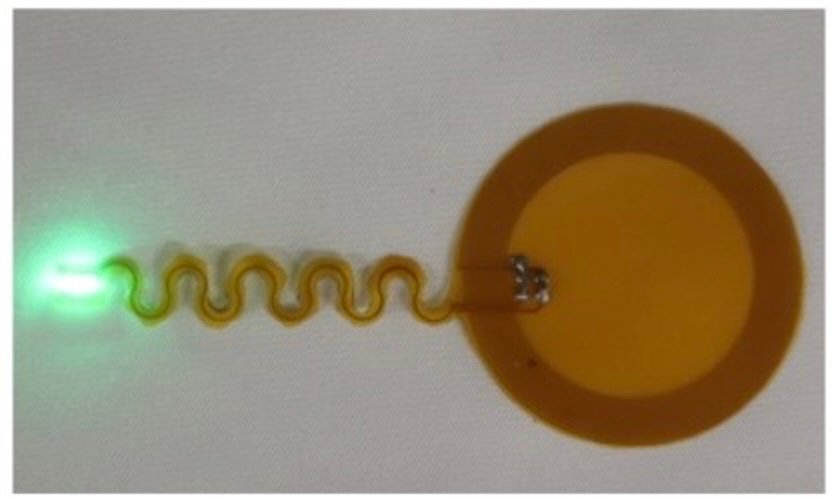
The disc-shaped prototype measures 40 mm in diameter and incorporates four micro-LEDs mounted on a flexible substrate made from Parylene C, a biocompatible polymer commonly used in medical implants. The device was fabricated using advanced laser-based manufacturing techniques at the University’s James Watt Nanofabrication Centre.
Powered through resonant inductive wireless coupling, the micro-LED system can generate optical outputs exceeding five megawatts. In laboratory tests using synthetic tissue models designed to mimic human tissue, the researchers demonstrated that the device could transmit light effectively through tissue thicknesses of up to 50 mm with minimal loss.
The team also evaluated the system using a photosensitiser solution to test its ability to generate singlet oxygen, a highly reactive molecule responsible for destroying cancer cells during PDT. Results confirmed that the implantable LEDs successfully activated the photosensitiser and reliably generated singlet oxygen on demand.
Dr Rolan Mansour from the University of Glasgow’s James Watt School of Engineering, and corresponding author of the study, highlighted the significance of improving early cancer treatment technologies.
“Bladder cancer, like many others, is potentially curable if it is diagnosed and treated early,” said Dr Mansour. “Given that photodynamic therapy has the potential for fewer side effects and could improve cancer treatment outcomes, our work is focused on improving its effectiveness by delivering light where it’s most needed.”
Professor David Flynn, who leads the EPSRC PATIENT project behind the research, said the findings demonstrate how flexible bioelectronics, wireless power delivery, and photonics can be integrated to create advanced minimally invasive cancer therapies.
“These are very encouraging results, which demonstrate how flexible bioelectronics, wireless power delivery and photonics can be combined to create advanced, minimally invasive treatments,” Professor Flynn said. “Although there is still significant further experimental work to be done before the system is ready for clinical use, the results represent a significant step toward next-generation wireless cancer therapies and implantable photonic medical devices.”
The technology was recognised at the 2024 IET Excellence and Innovation Awards, where the research team received the Health Technology Award for its contribution to medical innovation.
The development reflects growing momentum in the use of bioelectronics, wireless medical devices, and photonic technologies to create targeted, patient-friendly approaches to cancer treatment and precision medicine.