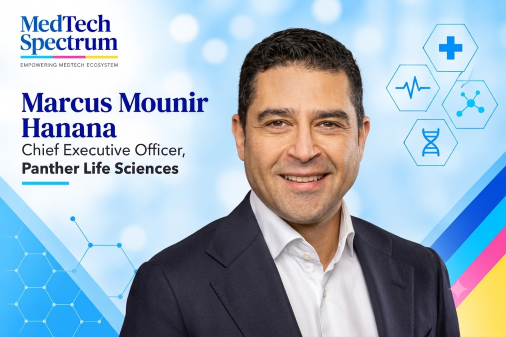
Microarray patch technology is emerging as a potential alternative to conventional injections and topical drug delivery, offering a minimally invasive approach to administering active ingredients through the skin. Panther Life Sciences is developing SmartPatch, a dissolvable microarray patch designed for self-administration, initially targeting skin health, with longer-term applications in vaccines and systemic therapeutics. The technology uses microscopic projections that penetrate the skin's outer barrier and dissolve to release active ingredients beneath the surface. In its first independent human study, SmartPatch demonstrated good tolerability following repeated use over four weeks, with no reported adverse events or unexpected skin reactions. The company is now conducting a 40-participant efficacy study, with results expected in early 2027. In this interaction with MedTech Spectrum, Marcus Mounir Hanana, Chief Executive Officer, Panther Life Sciences, discusses the clinical findings, the science behind SmartPatch's delivery mechanism, and how connected software and artificial intelligence could enhance treatment adherence, formulation development and personalised care. He also outlines the regulatory, manufacturing and clinical milestones required to extend the platform beyond skincare into therapeutic applications.
Could you share the key findings from Panther’s first clinical trial of SmartPatch? What were the primary endpoints, and what did the results reveal about its safety, tolerability, efficacy, and potential as an alternative to conventional hypodermic injections and topical treatments?
Our first study was an independent human study on periorbital skin, the crow’s feet area around the eyes. The primary endpoint was tolerability of SmartPatch after repeated use over four weeks, and it met that endpoint. Based on dermatologist assessments, the patch was well tolerated throughout, including at a one-week follow-up, and no adverse events or unexpected skin reactions were reported. Skin-barrier integrity was also maintained, with no statistically significant difference in water loss (TEWL) between patch and control sites. The study wasn’t designed to measure efficacy. We included standardized facial imaging (VISIA-CR) as an exploratory measure, and it identified early signals of improvement. Our 40-participant efficacy study began on October 1 and is now underway. On injections and topicals: this study answers the first question any delivery platform has to answer, which is whether skin tolerates it with repeated use.
How does SmartPatch’s microarray patch (MAP) technology deliver active ingredients through the skin? What are its key technological advantages over conventional drug delivery methods, and how does it address challenges related to patient comfort, ease of administration, and treatment adherence?
SmartPatch is a dissolvable microarray patch (MAP) with microscopic projections that users can apply and remove themselves. The outer layer of the skin, the stratum corneum, acts as a barrier that keeps creams from delivering large molecules like collagen or hyaluronic acid beyond the stratum corneum. SmartPatch’s projections are made from the formulation itself. They pass through that outer layer and dissolve in the layers of the skin beneath it, releasing the active ingredients there.
Compared with injections, there’s no syringe, no sharps to dispose of, and no need for a clinician to apply it. Compared with creams, the ingredients get past the skin barrier instead of sitting on the surface. We designed SmartPatch for skin care first. The longer-term goal is to make injectables and immune-based therapies more accessible through a dissolvable patch that people can apply themselves, eliminating the need for needles, clinic visits, and cold-chain logistics. Self-application also helps with adherence: a treatment people can use at home, on their own schedule, is one they’re more likely to keep using.
What role does the connected software platform play in SmartPatch-based care? How does the accompanying app monitor usage and adherence, and how could these insights help healthcare providers and pharmaceutical companies improve treatment outcomes and patient engagement?
We’re building SmartPatch as a platform rather than just a patch. Each patch carries a microelectronics with individual identification and production batch traceability. Our app will record, with the user’s consent, when, where on the skin, and how often the patch is applied. The app will prompt users when it’s time for their next patch and walk them through applying it, including how long to leave it on so the formulation fully dissolves. Each application will be securely logged, turning each use into a data point that will help us better understand how the patch is used to continually improve the platform.
For providers, this data could give clinicians a better understanding of adherence, which is one of the most difficult things to measure in healthcare. We see a future where a dermatologist could do an initial in-office treatment, send the patient home with maintenance patches, and with the patient’s consent, use the data from the app to see whether they’re being applied on schedule. Clinicians could stay more connected with their patients, send reminders to keep using the patches, and better recommend future treatments. Users will also be able to upload photos so they can follow visible changes in their skin.
Longer term, as we open the platform to pharma partners to deliver their molecules, the real-world adherence data we capture could give them insights that complement what traditional clinical trials can measure.
Panther describes its platform as AI-enabled. How is artificial intelligence being used to analyze user-generated and partner data? What types of insights can these models generate, and how could AI help accelerate product development, optimize formulations, and support personalized treatment approaches?
We use AI in our platform to build a feedback loop between the SmartPatch, the people using it, and our R&D team. On the development side, we combine our own data with data from partners and use AI-based modeling to deliver algorithmic formulation. That helps us narrow down options faster than traditional trial-and-error lab work.
On the user side, image-processing models track visible changes in the skin over time and augmented reality helps guide users on patch placement. Together, these tools generate actionable insights into real-world efficacy, user consistency, and how different skin profiles respond to specific active ingredients.
With user consent, those real-world insights feed directly back into refining existing formulations, accelerate next-generation product development, and eventually tailor personalized treatment regimens to individual skin needs.
Beyond cosmetics, Panther is exploring applications in vaccines and systemic therapeutics. Which of these applications are the current priorities, and what scientific, formulation, and regulatory challenges must be addressed before SmartPatch can be used for clinical treatment delivery?
Skin health is our focus today. Beyond it, the areas we’re exploring include infectious disease, allergies, cancer, autoimmune diseases and metabolic disorders, and each will need its own clinical development and regulatory review. Each patch has to be precisely developed to deliver the correct dose at a precise depth. The formulation also has to be rigid enough to pierce the skin but dissolve quickly once it does, and stay shelf stable at room temperature. We also have to prove our manufacturing process is commercially viable, which is historically where therapeutic microneedle platforms have stalled. Starting with cosmetics gives us the chance to build clinical evidence and manufacturing experience with the patch for future therapeutic applications, and we’re excited about the potential to start bringing first partners onto our platform in 2027.
What are Panther’s next milestones for clinical development and commercialization? How does the company plan to establish the platform’s safety and efficacy, and what opportunities does its shelf-stable, self-administered format offer for expanding access to treatment, particularly in settings with limited healthcare infrastructure or cold-chain capabilities?
Our next milestone is completing our 40-participant skin care efficacy study, run by the independent clinical research organization SGS. We expect the final study report in early 2027 and plan to submit the findings for peer-reviewed publication. From there, we’ll build on the findings with larger and longer studies. On the commercial side, our manufacturing work has focused on making microarray patches consistently at volume, historically one of the biggest hurdles for the field. Access is also a big part of why we’re excited about the platform. Since SmartPatch doesn’t need cold-chain and can be self-applied, it could reach people in areas where cold chains and health care workers are limited, anywhere in the world. This is what makes the platform worth building.