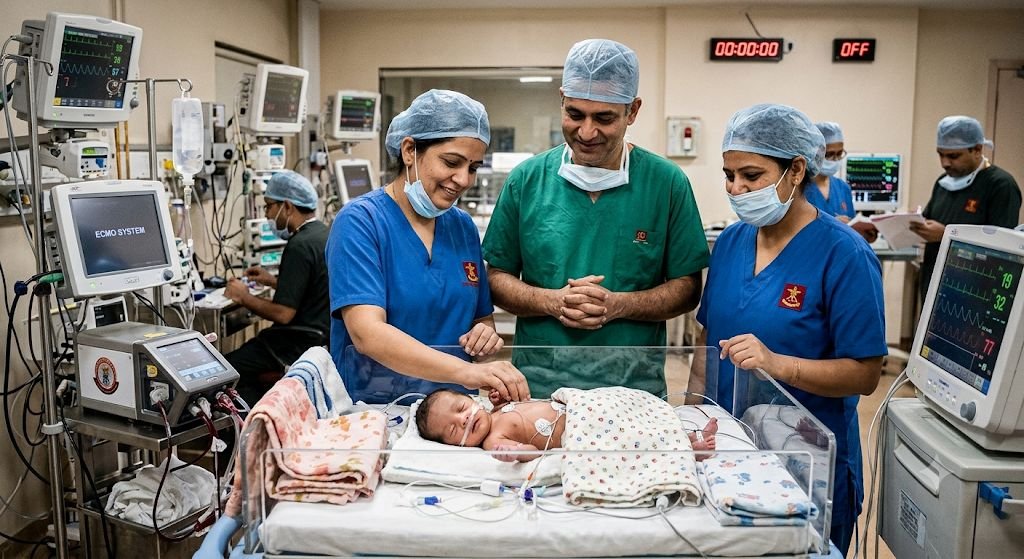
In a significant achievement in neonatal cardiac care, the Army Institute of Cardiothoracic Sciences (AICTS) has successfully treated a newborn with a complex congenital heart defect through advanced cardiac surgery and extracorporeal membrane oxygenation (ECMO) support.
The newborn, who was born in an unstable condition at Command Hospital, Pune, required urgent and highly specialised medical intervention. The infant initially underwent cardiac catheterisation, including balloon atrial septostomy (BAS) and patent ductus arteriosus (PDA) stenting, to stabilise the condition and optimise the baby for surgery. The procedure was performed by a team of paediatric cardiologists.
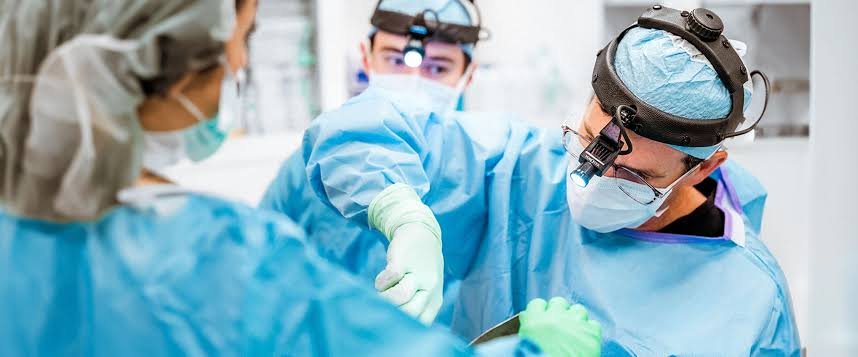
Subsequently, the cardiothoracic surgical team performed an arterial switch operation, along with stent extraction and closure of the atrial septal defect (ASD), to correct the underlying structural abnormalities and restore normal blood circulation.
However, the postoperative period presented further challenges. The newborn required extracorporeal membrane oxygenation (ECMO), an advanced life-support technique that temporarily supports heart and lung function when the organs cannot function adequately on their own.
Managing ECMO support following complex cardiac surgery in a newborn requires intensive monitoring and coordinated clinical decision-making. A multidisciplinary team comprising cardiothoracic surgeons, anaesthesiologists, perfusionists, paediatric cardiologists and intensive care nurses provided continuous support throughout the critical postoperative phase.
The team successfully weaned the infant off ECMO after 40 hours, marking a crucial milestone in the recovery process.
The case also highlights the comprehensive medical care extended by Army doctors to the family of a serving soldier deployed on the front lines. It demonstrates the role of multidisciplinary collaboration in managing highly complex neonatal cardiac conditions, from initial stabilisation and surgical intervention to advanced postoperative life support.
The successful outcome underscores the importance of specialised congenital heart programmes supported by advanced cardiac surgical facilities, neonatal intensive care units and ECMO capabilities. Such interventions can be potentially curative, offering critically ill newborns a chance to recover and renewed hope to their families.