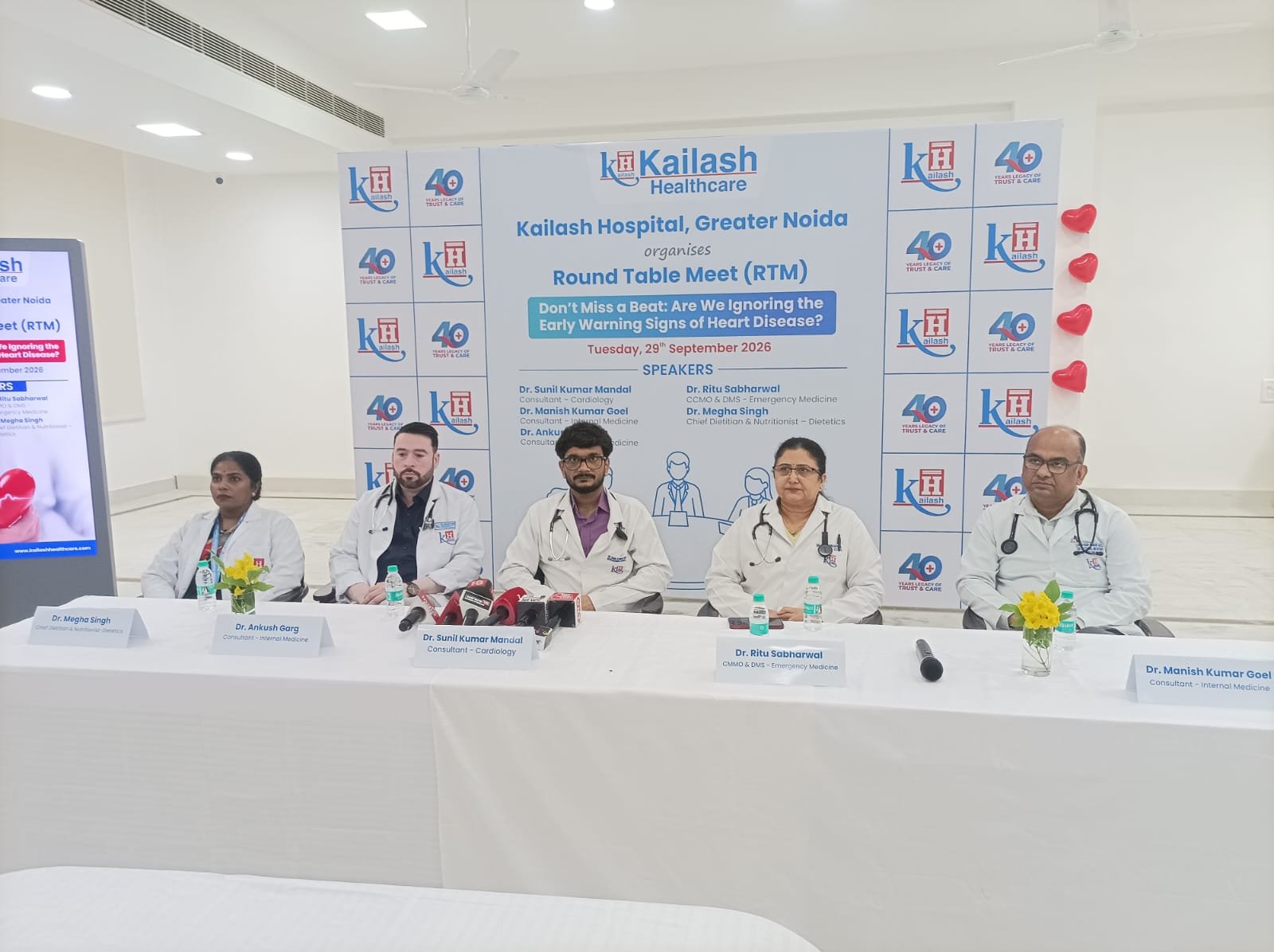
On the occasion of World Heart Day 2026, Kailash Hospital, Greater Noida, organised an exclusive Round Table Meet (RTM) bringing together experts from cardiology, emergency medicine, internal medicine, and nutrition to discuss the early signs of heart disease and the importance of timely medical intervention.
Held under the theme “Don’t Miss a Beat: Are We Missing Early Signs of Heart Diseases?”, the clinical discussion highlighted the importance of recognising symptoms that may often go unnoticed, understanding individual cardiovascular risk factors, and adopting preventive measures for better heart health.
The discussion assumed added significance in view of the World Heart Federation’s 2026 “Don’t Miss a Beat” campaign, which focuses on increasing awareness about the signs and symptoms of cardiovascular disease and the prevention of avoidable risk factors.
Speaking on the importance of recognising cardiac symptoms early, Dr. Sunil Kumar Mandal, Consultant Cardiologist, Kailash Hospital, Greater Noida, said,
“One of the key challenges associated with cardiac disease is that patients may not always recognise the importance of certain symptoms. Symptoms such as chest pain, breathlessness, unusual fatigue, dizziness, or discomfort during physical activity should not simply be attributed to acidity, stress, or exhaustion. The objective is not to create fear around every symptom, but to encourage people to understand their risk and seek medical evaluation when something feels different.”
From an emergency-care perspective, Dr. Ritu Sabharwal, CCMO & DMS – Emergency Medicine, Kailash Hospital, Greater Noida, highlighted the importance of seeking medical assistance without delay when warning signs appear. She said,
“In cardiac emergencies, the time between the onset of symptoms and seeking medical help can be crucial. Patients often wait to see if chest pain, breathing difficulties, or other symptoms resolve on their own. Awareness should therefore go beyond knowing that a heart attack can cause chest pain. Individuals and families should also understand the importance of seeking immediate medical assistance when symptoms appear, rather than attempting to manage them at home or waiting for them to worsen.”
The RTM also brought together Dr. Manish Kumar Goel, Consultant – Internal Medicine; Dr. Ankush Garg, Consultant – Internal Medicine; and Dr. Megha Singh, Chief Dietitian & Nutritionist, Dietetics, enabling a multidisciplinary discussion on cardiovascular health.
The panel highlighted that heart health needs to be viewed from a broader preventive perspective and not only in the context of an acute cardiac event. Risk factors such as hypertension, diabetes, imbalanced cholesterol levels, smoking, physical inactivity, unhealthy dietary habits, obesity, stress, and family history may be associated with cardiovascular disease and may require appropriate medical assessment and screening.