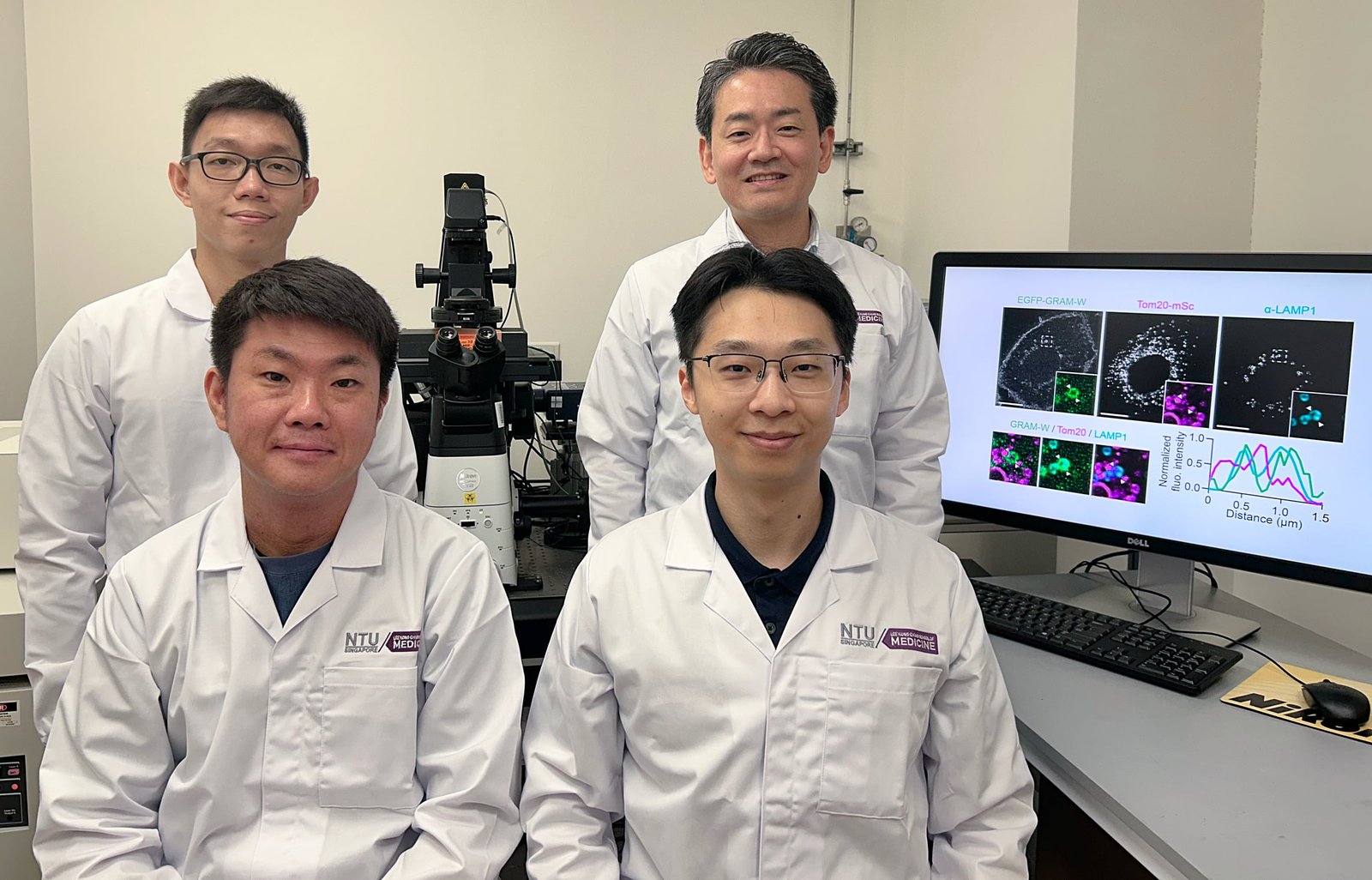
Researchers at Nanyang Technological University, Singapore (NTU Singapore) Lee Kong Chian School of Medicine (LKCMedicine) have identified a previously underappreciated role for cholesterol in protecting lysosomes, the cell’s recycling centres, during the breakdown of damaged mitochondria.
Published in Nature Communications, the study describes how cells rapidly transport cholesterol to lysosomal membranes when these organelles take in damaged mitochondria. The researchers say the mechanism helps lysosomes withstand the stress associated with digesting large cellular cargo while maintaining the acidic environment required for efficient waste breakdown.
Mitochondria generate energy for cells but become damaged over time. Cells remove these dysfunctional mitochondria through a quality-control process known as mitophagy, in which the damaged organelles are delivered to lysosomes for degradation. Failure of this process has been associated with cellular dysfunction and age-related neurodegenerative conditions, including Parkinson’s and Alzheimer’s diseases.
Using advanced cellular imaging, NTU Research Fellows Dr Yang Haoning and Dr Koji Matsuhisa, who is now an Associate Professor at Nagasaki University, Japan, tracked the molecular events occurring during mitochondrial degradation.
The study found that when damaged mitochondria reach a lysosome, the enzyme PI4KIIα generates the signalling lipid PI4P on the lysosomal surface. This signal recruits oxysterol-binding protein (OSBP), which facilitates the transfer of cholesterol from the endoplasmic reticulum (ER) to the lysosomal membrane.
The researchers also found that cholesterol depletion from the ER temporarily signals the cell to increase cholesterol production, helping maintain the supply needed during the recycling process.
“Lysosomes need to maintain an extremely acidic interior to digest cellular waste effectively. We discovered that as lysosomes take in damaged mitochondria, they reinforce their membranes with cholesterol,” said corresponding author Associate Professor Yasunori Saheki, Irene Tan Liang Kheng Chair Professor in Neuroscience at LKCMedicine.
The team further observed that successful digestion of mitochondrial membranes releases free fatty acids. The researchers are investigating how cells manage these potentially toxic lipids, adding another layer to the mechanisms that maintain cellular homeostasis.
The findings provide new insights into how lysosomes maintain their structural integrity and function during mitophagy. The researchers suggest that understanding these mechanisms could contribute to future research into how impaired cellular waste clearance may be linked to neurodegenerative diseases.