HealthTechX Asia 2026 placed artificial intelligence at the centre of healthcare transformation, with discussions moving beyond the promise of automation to the practical requirements for safe, scalable and clinically useful deployment. Across keynote and track sessions, the event reflected a sector increasingly focused on how AI can support healthcare delivery while maintaining accountability, governance and patient trust.
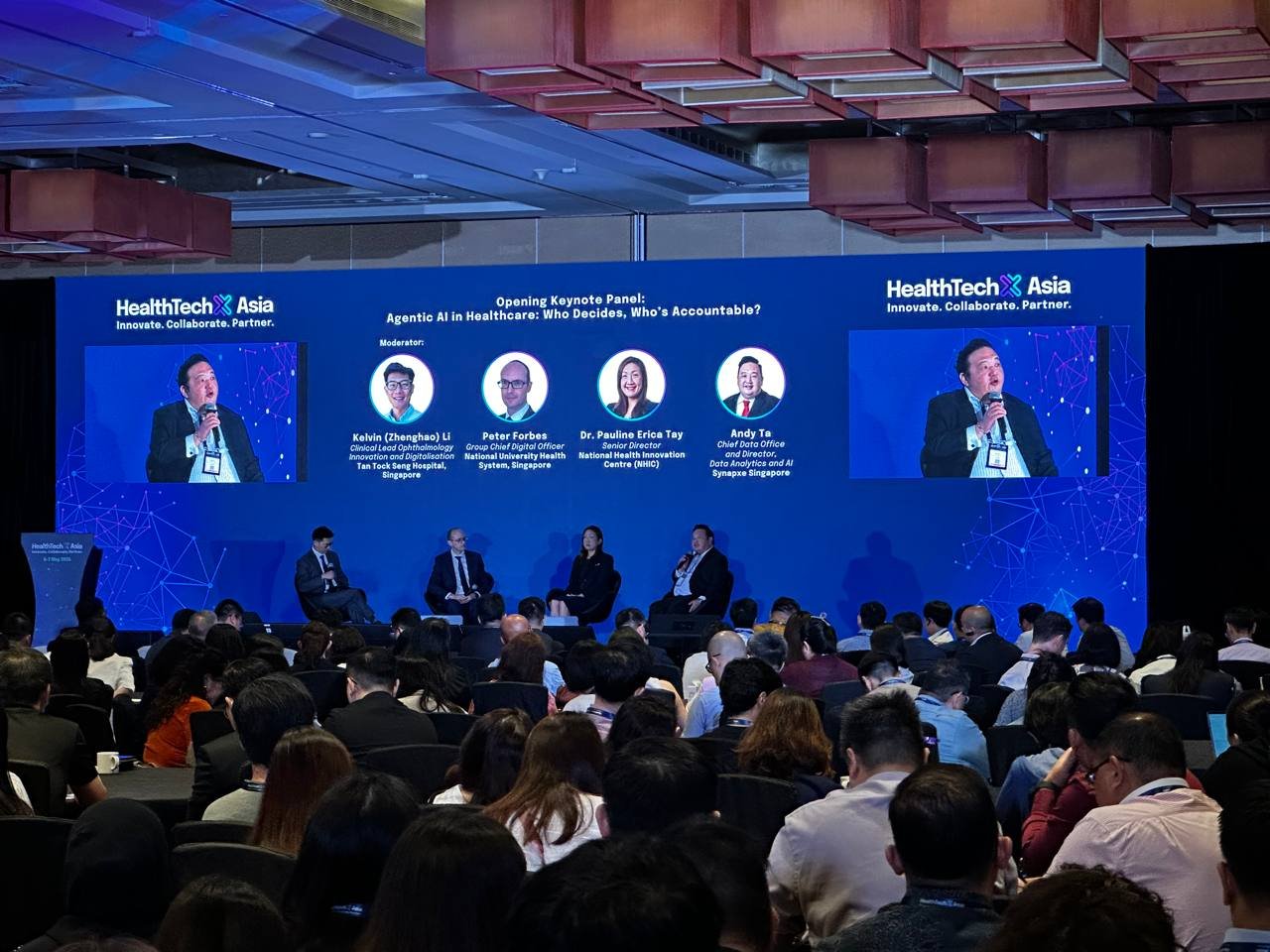
The opening keynote panel, “Agentic AI in Healthcare: Who Decides, Who’s Accountable?”, set the tone for the event by examining how more autonomous AI systems should be governed in clinical settings. The discussion centred on governance, accountability and the use of frameworks such as AGILE guidelines to guide safe and effective AI deployment.
A key message from the panel was that AI should augment, rather than replace, clinical judgement. The speakers discussed the importance of human-in-the-loop systems, clear escalation pathways and fallback mechanisms, particularly as AI tools become more embedded in clinical decision-making. The panel also highlighted challenges around interoperability, liability and cost-effectiveness, reinforcing the need for robust monitoring systems before AI can be scaled across healthcare institutions.
This governance theme continued in the session “Navigating AI Governance, Ethics & Risk Management with AI and Digital Literacy Strategy,” which explored Singapore’s approach to responsible AI adoption in healthcare. The presentation highlighted the need for data governance, periodic audits, digital literacy and AI fluency across healthcare organisations. It also noted the emergence of specialised roles such as AI ethicists, governance specialists, risk professionals and knowledge engineers as institutions move from AI experimentation to operational integration.
HealthTechX Asia’s programme also reflected the growing importance of workflow redesign in digital healthcare. Sessions such as “The AI Performance Blueprint – Rearchitecting the Value Case for Patient Experience & Sustainable Innovation,” “The Invisible Infrastructure: Why Clinical Governance Makes or Breaks Health AI,” and “From Pilot to Practice: Scaling Speech-to-Text and Nursing Workforce Transformation at NUH” pointed to a common challenge: AI value is not created by the technology alone, but by how well it is embedded into clinical workflows and workforce routines.
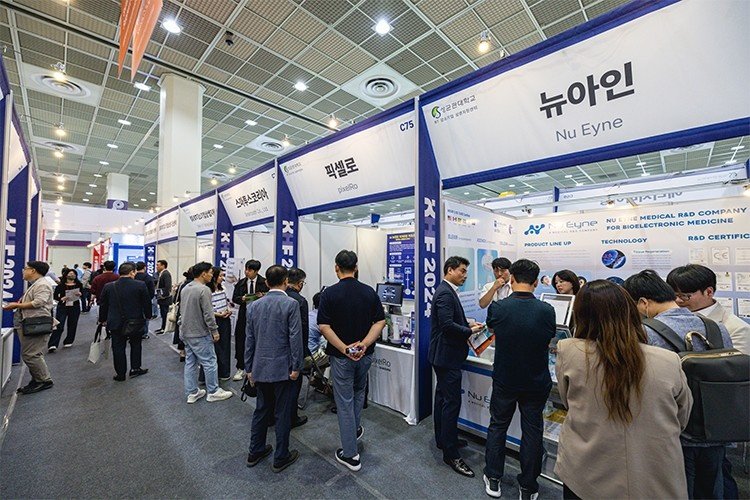
This theme was visible on the exhibition floor through Heidi, which positioned itself as an “AI Care Partner” supporting clinicians from documentation to decisions and follow-up. According to its event materials, Heidi supports two main functions: Heidi Scribe for clinical documentation and Heidi Evidence for independent clinical answers. Heidi Scribe listens to consultations and generates structured, reviewable notes, while the platform states that clinicians remain in control through clear, editable outputs and no hidden or autonomous decision-making.
The Heidi materials also highlighted relevance for multilingual clinical environments, including the ability to pick up conversations in Mandarin, Malay and Tamil. The company’s pamphlet cited real-world impact metrics, including 2.5 million patient visits supported each week, 37 million hours returned in 18 months and use across more than 200 clinical specialities. These claims align with Heidi’s broader positioning as a clinical AI platform designed to reduce administrative burden while keeping clinical review central to the workflow. Heidi’s public materials also describe the platform as supporting clinicians across documentation, evidence and follow-up tasks.
Another relevant exhibitor was AITRICS-VC, also known as VitalCare, which represents a different but complementary direction for healthcare AI: predictive patient safety. Public company information describes AITRICS-VC as a medical AI solution that uses hospital electronic medical record data to predict patient deterioration at an early stage. In general wards, the solution is described as predicting risks including death, ICU transfer, cardiac arrest and sepsis, while in intensive care settings it predicts mortality risk.
HealthTechX Asia’s exhibitor materials described AITRICS-VC as using 19 types of EMR data, including vital signs, blood tests, Glasgow Coma Scale and age, to detect abnormal signs early. This places the solution within the wider event discussion around clinical decision support, data-driven healthcare and the need to embed AI safely into treatment pathways. The programme included related sessions such as “Clinical Decision Support in Action: Embedding AI into Treatment Pathways” and “From Ambient AI to ECG Intelligence: How Narayana Health is Re-wiring Care with Data and Automation,” underscoring how AI is increasingly being evaluated through its ability to support clinical decisions and operational readiness.
Together, Heidi and AITRICS-VC reflected two practical directions for healthcare AI showcased around HealthTechX Asia 2026: reducing the administrative load associated with clinical documentation, and supporting earlier identification of patients at risk of deterioration. Their relevance also reflects a broader shift in the market, where AI adoption is increasingly being judged not only by technical capability, but by clinical safety, workflow fit, governance, interoperability and measurable impact.
As healthcare systems across Asia face workforce pressures, rising patient demand and increasingly complex care needs, HealthTechX Asia 2026 showed that the next phase of healthtech adoption will require more than new digital tools. The event highlighted the importance of trusted infrastructure, responsible implementation and cross-sector collaboration to ensure that AI can support clinicians, improve patient outcomes and scale sustainably across real-world healthcare environments.