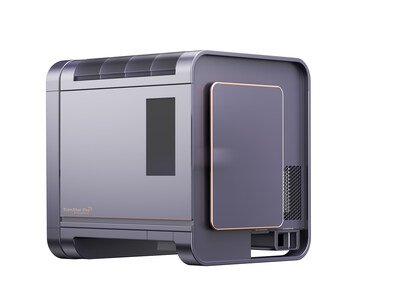
Clarapath has announced the launch of TrimStar Pro, a new robotic microtomy system designed to improve efficiency and consistency in histology laboratory workflows. The solution addresses a key operational challenge in pathology labs: the labor-intensive and time-consuming process of tissue block facing and trimming, which can impact turnaround times and diagnostic accuracy.
The system is positioned as a practical entry point for laboratories seeking to adopt automation without committing to full-scale infrastructure changes. Unlike fully integrated systems that require significant capital investment, TrimStar Pro offers a modular and upgradeable platform that allows labs to scale automation progressively.
TrimStar Pro differentiates itself through its flexibility and compact design, occupying approximately half the footprint of Clarapath’s flagship SectionStar system while maintaining compatibility with existing workflows. Advanced sensing capabilities are incorporated to enhance precision and repeatability in tissue preparation, supporting more consistent downstream analysis.
The system is currently FDA-registered and available to qualifying customers, indicating readiness for clinical use and early commercial deployment. Clarapath’s broader portfolio strategy enables laboratories to transition from partial automation with TrimStar Pro to fully automated workflows using its SectionStar platform, creating a scalable pathway toward end-to-end automation.
Target users include histology laboratories facing increasing pressure to improve throughput, reduce variability, and address workforce constraints. As case volumes rise and staffing shortages persist, automation solutions that enhance efficiency without disrupting existing processes are gaining traction across pathology settings.
However, adoption will depend on factors such as integration with existing laboratory systems, cost considerations, and demonstrated improvements in workflow efficiency. As with many automation technologies in healthcare, clinical validation and operational ROI will be critical in driving broader uptake.