As artificial intelligence becomes more accessible to the public, more individuals are using consumer-facing AI tools to understand symptoms, interpret health information and navigate medical concerns. In Singapore, this shift is happening at a time when patients are seeking faster, more convenient and more affordable ways to manage their health.
However, the growing use of AI in healthcare also raises important questions around accuracy, accountability, privacy and patient safety. While AI may improve access to information and reduce administrative friction, medical interpretation still requires clinical context, professional judgment and human oversight.
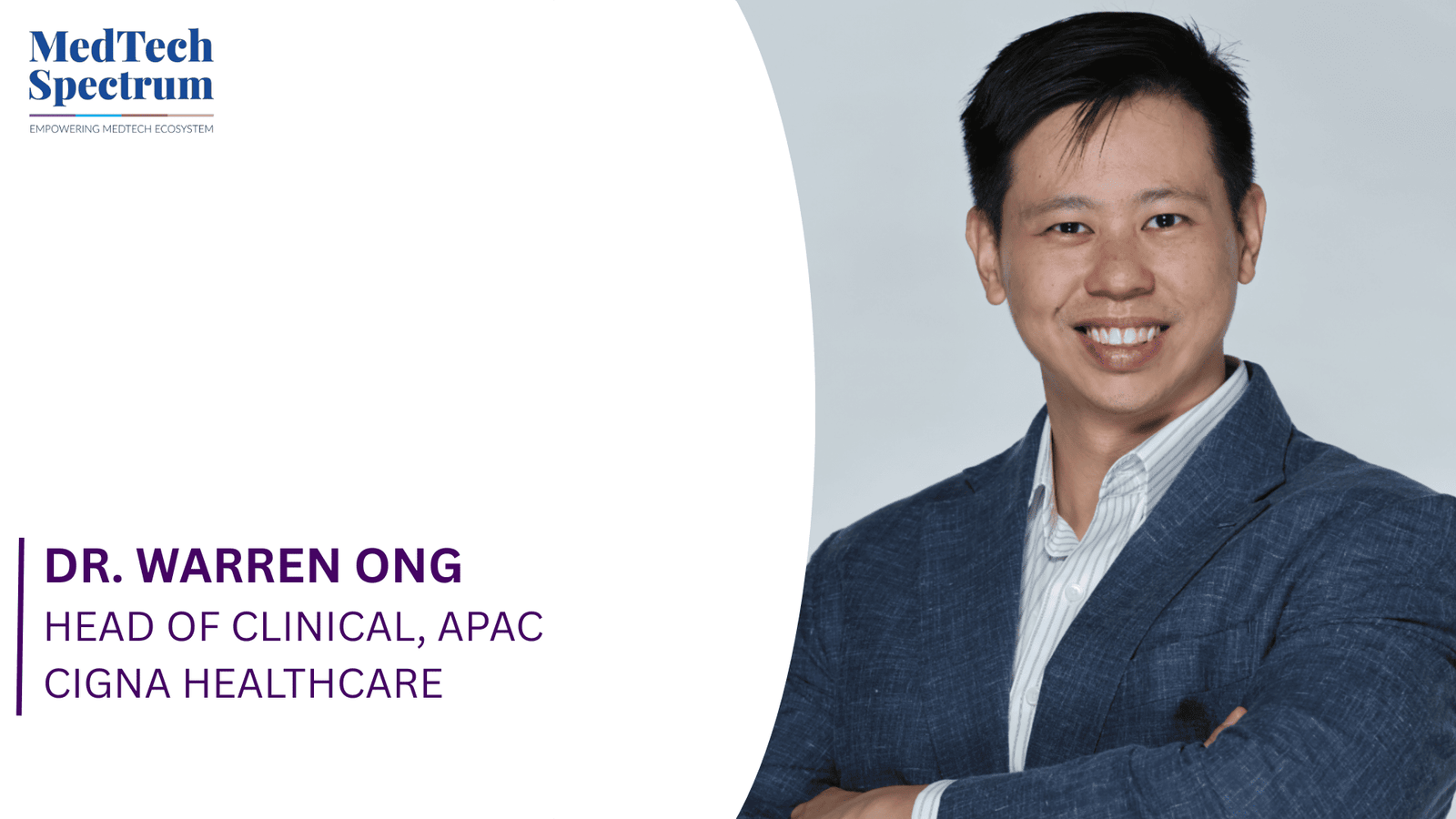
Speaking with Dr Warren Ong, Head of Clinical, APAC, Cigna Healthcare, discusses why Singaporeans are turning to AI for healthcare information, the clinical risks of relying on AI-generated interpretations, the importance of clinician-in-the-loop models, and how organisations can build trust under Singapore’s AI in Healthcare Guidelines.
What factors are leading Singaporeans to choose AI over traditional clinics, and what does this reflect about our current healthcare landscape?
Firstly, I believe it's crucial to establish that AI is not replacing clinics, but we’re definitely seeing a general trend to use AI for initial diagnosis and consultations, which we may want to be mindful of. Generally, Singapore residents are cautiously optimistic about AI in healthcare. According to our International Health Study 2025, around 47% of respondents were positive about the impact of AI on healthcare. One of the most anticipated positive impacts is the reduction of waiting times for healthcare services. This could suggest that more are looking forward to AI being used as an administrative tool rather than a source of medical advice.
The growing inclination towards AI may also be driven by the changing economic and operational landscape in healthcare. Currently, Singapore is grappling with a projected private medical inflation of 16.9%, nearly triple the global average. This is largely driven by an ageing population, rising operational costs, and shifts in public insurance structures. Out-of-pocket healthcare expenses remain one of the biggest concerns for consumers.
Patients may see AI tools as a faster and often free solution, which can be a trigger for usage. While it is good to see individuals taking an active role in their health by using these tools to help them improve their wellbeing, concerns remain around how AI is used, as well as whether there are guidelines or regulations around consumer AI tools for more specific healthcare concerns.
As such, it is vital for healthcare providers, insurers and public agencies to collaborate effectively on educating individuals on how they may use such AI tools in a safe way; as well as weave these convenient digital touchpoints into the existing official or regulated primary care infrastructure to complement existing healthcare services with reliable and accurate healthcare information.
While AI can improve access to health information, what are the most significant clinical risks associated with patients relying on AI-generated interpretations of symptoms, lab results, or medical reports?
Relying on unverified algorithms poses distinct clinical challenges. Medical reports, diagnostics, and lab results are inherently nuanced and require an experienced clinician to provide a reliable diagnosis. Unguided AI algorithms and consumer-facing generative models lack contextual awareness to factor in each patient’s unique underlying conditions, specific life stages or mobility needs, which can lead to misinterpretation of clinical results.
This can potentially create a two-fold clinical concern. Firstly, early intervention is the bedrock of positive health outcomes. However, automated AI tools could oversimplify complex clinical markers as benign, inadvertently causing a patient to miss the optimal golden window. However, an overly conservative algorithm may misinterpret baseline variations, flagging them as life-threatening or critical. What this does is trigger needless heightened patient anxiety, pushing them to seek immediate specialist care; when, instead, if the patient had consulted a primary care physician with their initial symptoms, they may have received a less extreme diagnosis and a more nuanced and accurate treatment plan.
While an AI tool does a good job at understanding data patterns, they still lack the ability to fully understand the holistic health profile of a patient. A crucial part of quality, reliable medical care is a trained clinician’s ability to interpret your medical data, with consideration of a patient’s lifestyle and medical history. Furthermore, with algorithms operating without clinical accountability, patient safety is compromised when a “diagnosis” is made. AI for knowledge needs to be positioned merely as a tool for initial informational research, but professional medical practitioners are best placed to guide patients most accurately.
It’s also not advisable for patients to share so much of their personal information on AI platforms that are public-facing, as they might subject themselves to unnecessary security risks, depending on the privacy policies of these platforms.
How should healthcare providers, insurers, and regulators balance the benefits of consumer-facing AI tools with concerns regarding accuracy, accountability, and patient safety?
It has become evident that balancing the benefits of AI tools with patient safety cannot be achieved in siloes and should instead be built upon a deeply collaborative framework that involves regulators, insurers, and providers to act as co-architects of the new healthcare ecosystem.
Currently, the Singapore regulatory bodies have presented themselves as an excellent global benchmark where the existing framework is defined by a clear, unified line of accountability. For example, the Ministry of Health has released a set of guidelines on the use of AI in Healthcare; which would help guide practitioners and enforce accountability across the industry.
For insurers and healthcare providers, safety needs to be at the forefront of what we do when exploring new digital tools. For example, structuring the use of technology in ethical and accountable ways, with trusted network providers, and establishing value-based healthcare partnerships that prioritise the individual’s health.
The key is to focus on value to the individual, rather than healthcare volume. By doing so, we ensure that digital integrations are effectively aligned towards positive outcomes for the individual.
How can clinicians and patients effectively utilise AI to leverage its benefits while maintaining the safety standards provided by clinical training?
Ultimately, AI is a tool that clinicians and patients can use to support the decision-making process, but it should not be used to make the final decision.
In healthcare, it might mean that we establish a definitive “clinician-in-the-loop” paradigm, where the ideal configuration presents a complementary, hybrid model. That is, technology is deployed to absorb the mundane and immense operational and administrative drag while enabling healthcare professionals to fully focus on the clinical decisions and treatments.
For clinicians, using AI to digitalise clinical documentation, flag baseline anomalies, or analyse high-volume electronic health record datasets would alleviate burnout. This effectively enables physicians to dedicate their time to clinical training and deliver personalised, evidence-based treatments to the patient.
For patients, AI tools serve as a smart health assistant, increasing administrative convenience, medication administration, and wellness tracking. However, medical professionals should not be complacent about the effectiveness of AI tools and ensure the patient’s digital health journey is still anchored to professional medical oversight. The goal of AI integration really is to enhance their clinical consultations rather than using them to bypass professional diagnostics entirely.
At Cigna Healthcare, we operate the same hybrid model. While our team may leverage AI tools to help in work processes, final decisions are always made by trained experts to ensure nuanced decision-making. By adapting this hybrid approach, we can reap the benefits of AI tools while ensuring patient safety standards are not compromised in any way.
With the introduction of Singapore's AI in Healthcare Guidelines (AIHGle 2.0), what practical steps should organisations take to ensure AI is used responsibly and public trust is maintained?
Organisations must focus on transparency and accountability when adopting AI in their work processes. This means establishing clear internal governance frameworks on how AI technology is developed within the organisation; the data it is being tested on (and the consent provided for such use); and how these AI tools are eventually deployed in work.
As mentioned above, we should follow the ‘human-in-the-loop’ model, where a clinician or trained expert remains ultimately responsible for any final decisions or outcomes that would affect the individual consumer. This is especially important if it’s a decision relating to a patient’s treatment or diagnosis.
Should organisations adopt AI in their processes, they must also be transparent to their consumers in terms of how AI is being used. I would recommend being proactive and forthcoming with this sharing, clearly communicating what AI is being used for, and the limits to the usage.
Looking ahead, how do you see AI evolving within patient engagement and healthcare delivery, and what safeguards will be critical to ensuring it complements rather than replaces professional medical advice?
The use of AI tools for healthcare is still evolving in Singapore, as well as across the globe.
As we see data volume expanding, we will also be experiencing AI running subtly in the background of patients' lives. For instance, using AI to analyse data from wearable health devices to monitor triggers of typical chronic disease risks before symptoms manifest, or helping individuals navigate the complex health system more seamlessly and instantaneously.
However, the industry should never be complacent with the capabilities of these tools and should always uphold its commitment to human-centric safeguards. The most vital safeguard is that AI must only augment and should never replace professional medical advice and human clinical licensure. The formulation of a medical diagnosis delivery that is merely based on algorithms and data points would lack empathy, ethical reasoning and the nuanced bedside reassurance, which forms the heart of healthcare.
By focusing on using AI to handle the volume of administrative tasks, we free up critical system resources, allowing healthcare professionals to focus entirely on delivering high-quality, personalised, and deeply compassionate patient care.