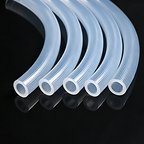
Ruixiang Silicone has released a platinum-cured medical-grade silicone tubing series for use in cardiac assist systems, micro-infusion systems and hemodialysis equipment.
The tubing is intended for fluid transfer components where materials may come into direct contact with drug solutions or extracorporeal circulation pathways. This is relevant because tubing materials can affect device reliability, fluid integrity and long-term qualification requirements for regulated medical device manufacturers.
The product is manufactured at an FDA-registered facility and carries USP Class VI certification, ISO 10993 biocompatibility evaluation and ISO 13485:2016 quality management system certification. These certifications are important for OEMs and ODMs seeking materials that can support documentation and qualification for medical device applications.
Ruixiang Silicone positions the tubing as an alternative to conventional peroxide-cured silicone tubing. The company said peroxide-cured materials can leave residual byproducts that may migrate into fluids if post-cure processing is incomplete, while platinum-catalysed addition curing avoids release of small-molecule byproducts.
The tubing is designed to remain colourless and transparent through extended storage and repeated autoclave sterilisation. Optical clarity is also relevant for clinical and manufacturing settings where visual inspection of fluid lines is needed during operation.
Dimensional consistency is another focus. Ruixiang Silicone said it holds inner and outer diameter tolerances to ±0.02 mm using a vertical extrusion process. The minimum processable inner diameter is 0.14 mm, with a wall thickness floor of 0.1 mm, bringing the product into range for micro-catheter assembly and precision infusion device manufacturing.
Production takes place in GMP-compliant cleanrooms rated at ISO Class 8 and Class 300,000 under Chinese national standard GB 50073, within a 5,000 m² facility in Dongguan, Guangdong Province. The company said it serves customers across more than 50 countries and reports over 5,000 enterprise clients across medical device, biopharmaceutical and food-grade fluid handling sectors.
The development reflects the growing importance of specialised component suppliers in medtech manufacturing. As medical devices become more complex and supply chains more regulated, material performance and certification readiness may become stronger differentiators for component manufacturers.