E-Scopics has received US FDA clearance for expanded capabilities on its Hepatoscope platform, supporting wider use of non-invasive ultrasound testing for liver disease assessment.
This addresses an important gap in liver care. Patients with chronic liver disease and cirrhosis often need repeated assessment, but access to advanced imaging tools can be limited depending on the hospital, clinic or care setting. Therefore, a portable system that can support bedside assessment may help clinicians make decisions earlier and more consistently.
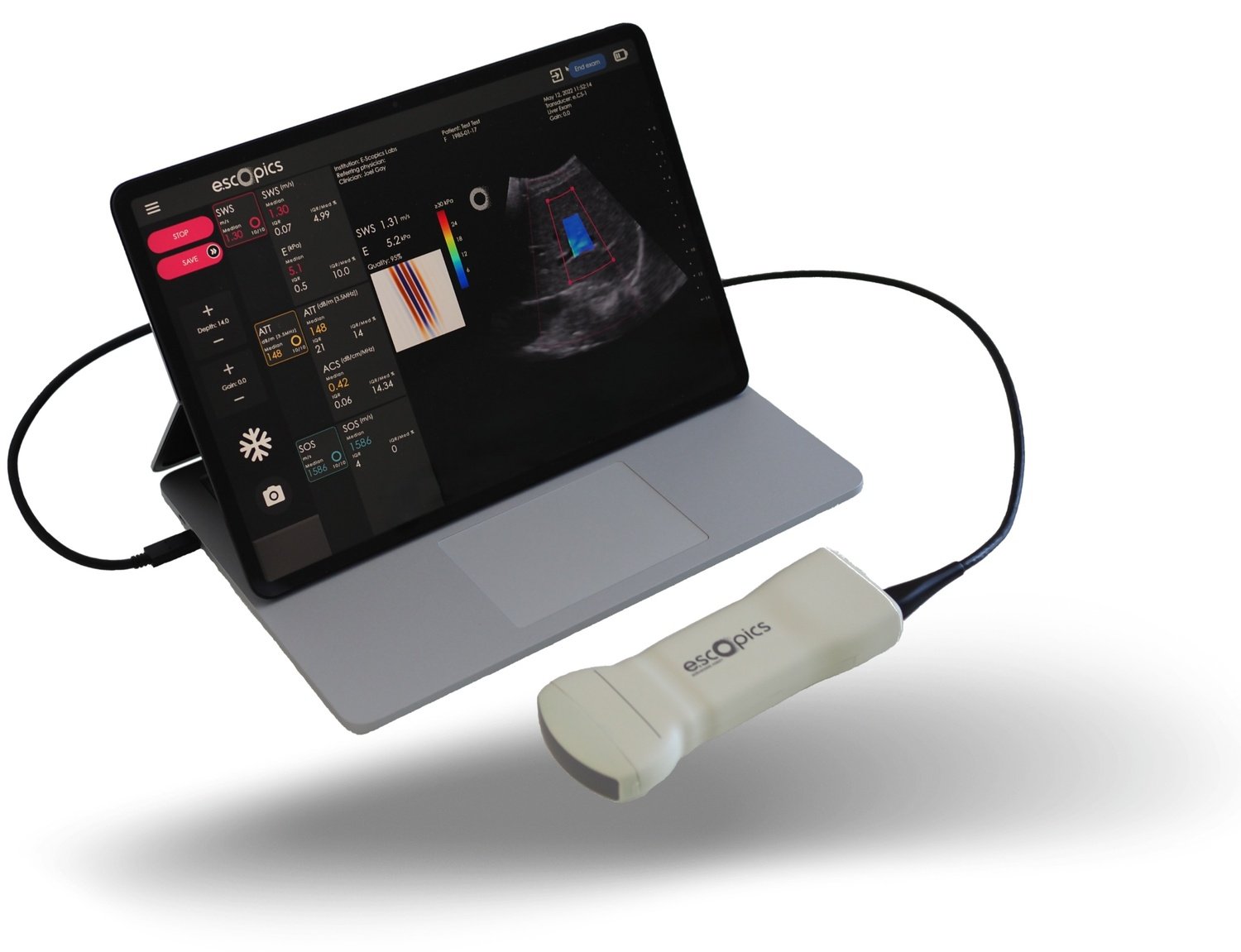
The updated platform now includes a dedicated spleen exam workflow, allowing clinicians to assess spleen stiffness as part of cirrhosis complication management. Hepatoscope combines real-time ultrasound imaging with transient elastography in a portable system, making it suitable for use in inpatient wards, outpatient clinics and community practice.
Another important update is its compliance with the IEC 63412-1 ultrasound elastography standard for tissue stiffness mapping. This improves how stiffness changes are visualised and may support better monitoring of disease progression or treatment response.
The platform also now supports macOS-based laptops and HL7 FHIR R4 connectivity with electronic health record systems. This means clinicians can access schedules, select patients from worklists and export reports more directly into hospital systems.
However, adoption will still depend on clinician training, workflow fit, reimbursement and whether hospitals see enough value in shifting liver assessment closer to the point of care. For E-Scopics, the next step is proving that portability and software-based ultrasound can translate into routine clinical use.
As liver disease management becomes more decentralised, tools that combine imaging, quantification and workflow integration may become more relevant. Hepatoscope’s update shows how point-of-care ultrasound is moving beyond basic imaging into more structured disease assessment.